 Trailers
 Buses
Buses
 Tractors
 Rollers
 Cranes
 Loaders
 Graders
 Forklifts
 Dozers
 Excavators
 Boats
Boats
 Caravans





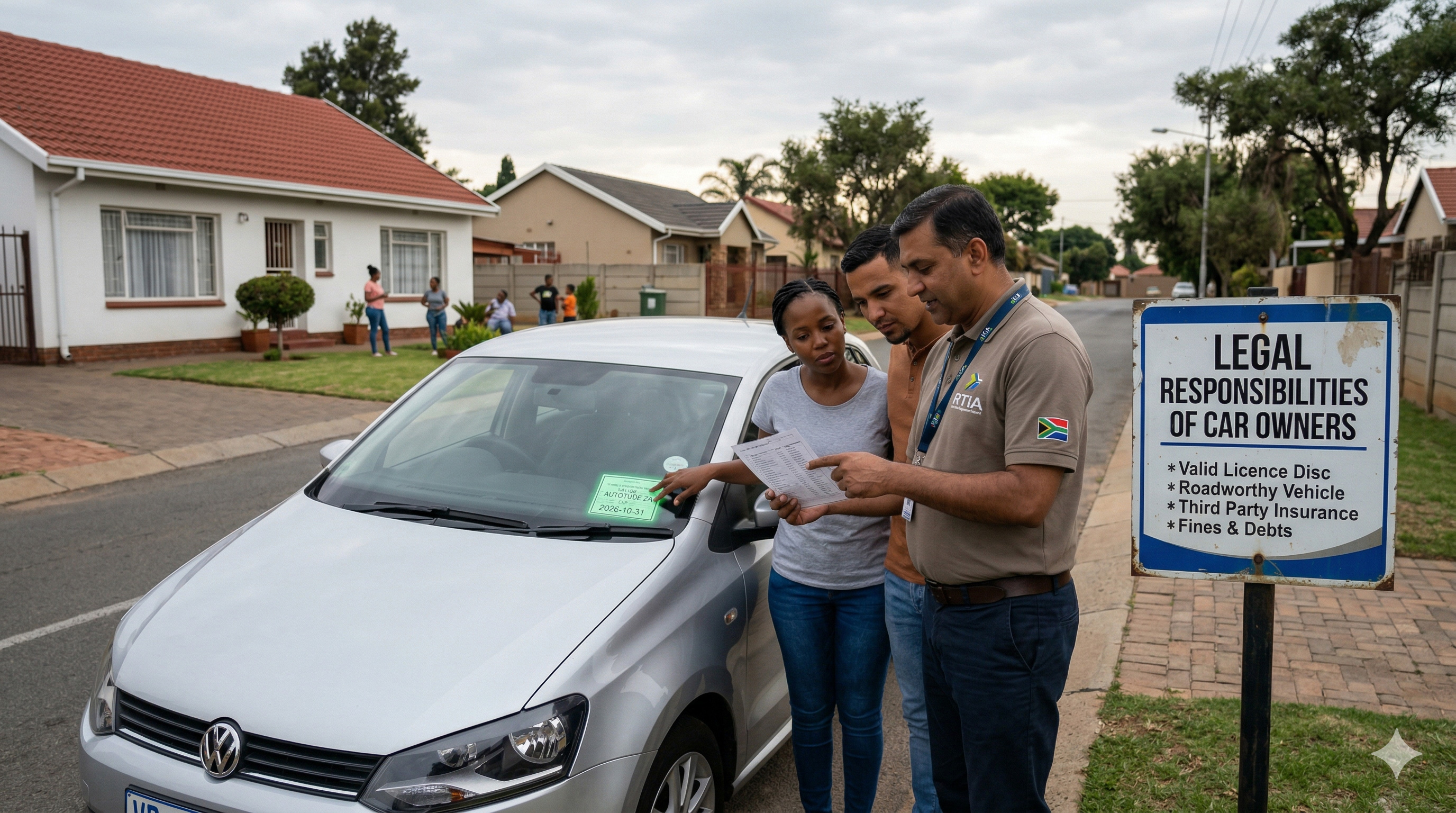
The Complete Guide to Legal Responsibilities of Car Owners in South Africa
What Every Driver Needs to Know Before They Hit the Road
Let me be honest with you.
Most of us think owning a car is about freedom. The open road. Road trips. Not having to rely on Gautrain schedules or Uber surge pricing.
But here's what nobody tells you when you drive off that dealership lot: owning a car in South Africa comes with a serious stack of legal responsibilities. And if you ignore them, the consequences can be brutal—think unlimited fines, court appearances, licence suspension, or even having your car impounded.
I've watched friends learn these lessons the hard way. One left his old bakkie parked on a suburban street for two weeks while he was on holiday. Came back to find it gone—impounded, with a massive storage bill waiting for him. Another ignored a speeding fine, assuming it would just "go away." It didn't. The penalties tripled, and his licence renewal got blocked.
This guide is everything I wish someone had handed me when I bought my first car. Let's break down exactly what the law expects from you, and how to stay on the right side of it.
Part 1: The Golden Rule – You Are Responsible for Your Car, Period
Here's the most important legal principle every car owner needs to understand:
Under South African law, the owner of a vehicle is presumed to be responsible for what happens with that vehicle.
Section 73 of the National Road Traffic Act 93 of 1996 (NRTA) creates a legal presumption that the owner of a motor vehicle was the driver or person who parked the vehicle, unless proven otherwise.
What does this mean in plain language?
If your car is caught speeding by a traffic camera, the fine comes to you—not to whoever was driving. If your car is parked illegally, the ticket comes to you. If your car is involved in an accident and the driver flees, the authorities come looking for you.
You can later prove someone else was driving. But initially, the buck stops with the registered owner.
This presumption exists for a practical reason: traffic authorities can't magically know who was behind the wheel at every moment. So they hold the owner accountable, and it's then the owner's responsibility to identify the actual driver.
Part 2: What the Law Says About Abandoning or Leaving Your Vehicle
This is where many car owners get into unexpected trouble. Let me walk you through Regulation 320 of the National Road Traffic Regulations, 2000—one of the most frequently violated (and misunderstood) rules on the books.
When Your Vehicle Can Be Removed
A traffic officer can have your vehicle removed immediately if:
-
It's standing on a public road in a position that, in the officer's opinion, is likely to cause danger or obstruction to other traffic
That's a very broad power. And here's the kicker: the owner is liable for all expenses incurred in the removal and storage of such a vehicle.
I've seen people hit with towing fees of R5,000+ and daily storage charges of R150–R300 per day. After a few weeks, the bill can exceed the value of the car itself.
The 7-Day Rule (This One Gets Everyone)
Here's a rule almost nobody knows about:
No person shall leave a vehicle in the same place on a public road for a continuous period of more than seven days.
That's right. You cannot legally leave your car parked on the same spot of a public road for more than a week.
What counts as "abandoned" under the law?
A vehicle is automatically deemed abandoned if:
-
It's parked where stopping is prohibited (regulation 304 violations)
-
It's left for more than 24 hours in the same place on a public road outside an urban area
-
It's left for more than 7 days in the same place on a public road within an urban area
-
It has no licence number affixed, or a false licence number is affixed
If your vehicle is deemed abandoned, the authorities can remove it, store it, and eventually sell it to recover their costs. And you'll be liable for:
-
Removal expenses
-
Storage fees (up to four months)
-
Costs of tracing you as the owner
Practical advice: If you're going on holiday for two weeks, don't leave your car parked on the street. Arrange for someone to move it, or park it on private property (like a friend's driveway or a paid parking facility).
What Happens If Your Car Is Impounded
The process works like this:
-
Your vehicle is removed and stored
-
The authority tries to trace you as the owner
-
Once traced, you have 14 days to recover the vehicle and pay all expenses
-
If you don't, or if you can't be traced after one month, the vehicle can be sold
The sale proceeds go first to:
-
Removal costs
-
Storage costs
-
Tracing costs
-
Sale costs
Any balance goes to you (if you claim it within one year). If no claim is made within a year, the balance is forfeited to the authority.
Here's the scary part: The law specifically states that authorities are not liable for loss, theft, or damage to your vehicle during removal or storage, as long as they acted reasonably.
So yes, your car can be damaged while being towed or sitting in an impound lot, and you have little recourse.
Part 3: The AARTO Demerit System – Your Driving Record Is Now on the Line
This is the biggest change to South African traffic law in decades. And if you haven't been paying attention, you need to start now.
AARTO stands for the Administrative Adjudication of Road Traffic Offences Act. It fundamentally changes how traffic violations are handled—moving them from criminal courts to an administrative system with demerit points.
Key Rollout Dates You Must Know
Date What Happens
December 1, 2025 AARTO rollout begins in 69 major municipalities (Joburg, Pretoria, Durban, Cape Town, etc.) April 1, 2026 Expansion to remaining 144 municipalities nationwide September 1, 2026 Demerit points system goes LIVE
Mark September 1, 2026, on your calendar. That's when your driving future gets put on a points system.
How the Demerit System Works
Every driver starts with zero demerit points. As you commit traffic offences, points are added.
Offence Type Demerit Points
Minor speeding (slightly over limit) 1–2 points Ignoring stop signs or red lights 2–4 points Serious offences (e.g., drunk driving) 6 points
The critical threshold is 15 points.
-
15+ points = Automatic driving licence suspension
-
You stay suspended for 3 months per point over 15
-
Example: 18 points = 3 points over = 9 months suspension
-
If you accumulate three suspensions, your licence is cancelled permanently and you must retake your driving test from scratch
Points don't stay forever, but they don't disappear quickly either:
-
Points reduce by 1 point every three months of violation-free driving
-
You can reduce by up to 4 points by completing an approved rehabilitation programme
The "Proxy" Problem – When You're Responsible for Someone Else's Driving
This is crucial for anyone who owns a vehicle that others drive.
If you're the registered owner of a vehicle (the "proxy"), all traffic fines and AARTO notifications go to you first. You are legally responsible for responding—even if you weren't driving.
Here's the trap: If a fine arrives and you ignore it, the demerit points could be allocated to you, not the actual driver.
The solution: When you receive an infringement notice, you have 32 days to:
-
Respond to the notice
-
Nominate the actual driver who was in control of the vehicle
-
Provide supporting documentation (logbooks, tracking data, etc.)
If you nominate the driver within 32 days, the fine and demerit points transfer to them. If you don't, you could be fined 3 times the standard fine amount and receive the points yourself.
For businesses with fleets: This is a major compliance issue. Companies need systems to track who drove which vehicle at what time. Telematics and GPS logs will become essential.
What Happens If You Ignore a Fine – The Escalation Path
Under AARTO, ignoring a fine is not a strategy. Here's what actually happens:
Day Event Consequence
Day 1 Infringement occurs Notice issued Day 1–32 Response period Pay fine (50% discount available) or contest Day 33–64 Courtesy letter sent Additional fees added After Day 64 Enforcement Order issued Vehicle licence renewal blocked Continued Enforcement escalates Demerit points added automatically; licence suspension possible
Fines issued under AARTO do not prescribe—they never expire. You cannot wait them out.
And critically: AARTO fines are now decriminalised for minor offences. This means they're handled administratively, not through criminal courts. The upside? You won't get a criminal record for speeding. The downside? The administrative process is faster, more efficient, and harder to fight.
Part 4: The Consumer Protection Act – Your Rights When Things Go Wrong
Being a car owner isn't just about responsibilities to the state. You also have rights—powerful ones—when the car itself is defective.
The Consumer Protection Act 68 of 2008 (CPA) applies when you buy a vehicle from a dealership (a supplier in the ordinary course of business).
Your Core Rights Under the CPA
Section 55 – The Right to Safe, Good Quality Goods
Every consumer has the right to receive goods that:
-
Are reasonably suitable for the purposes for which they are generally intended
-
Are of good quality, in good working order, and free of any defects
-
Will be usable and durable for a reasonable period of time, given the type of goods
Section 56 – The Implied Warranty of Quality
This is your strongest protection. It provides:
-
An automatic warranty that the vehicle is free of defects
-
The right to return defective goods within 6 months of delivery
-
The right to choose your remedy: repair, replacement, or refund
-
No penalty can be charged for returning defective goods
Important: Dealers cannot sell vehicles "voetstoots" (as-is) under the CPA. That clause is invalid for dealership sales.
What Counts as a "Defect"?
Section 53 of the CPA defines a defect as:
Any material imperfection, failure, or shortcoming in the performance or operation of the goods that renders the goods less acceptable than a person would reasonably be entitled to expect in the circumstances.
This definition is broad. And recent court cases have interpreted it generously for consumers.
Key Court Cases That Protect You
Case 1: The Rusty Ford Everest (Lazarus Motor Company v Robert, 2024)
A buyer found extensive rust in his brand-new Ford Everest. The dealership refused to repair it, claiming the buyer had spilled pool acid in the car.
The dealership argued the vehicle was still functional—it had transported the buyer for 170,000 km over 3 years.
The court's ruling: The dealership was ordered to remove the rust and repair the vehicle to the standard it should have been at sale. The court stated that a brand-new car "is not meant to have rusting or corrosion on any of its parts"—and that constitutes a defect even if the car still drives.
What this means for you: A car can be defective even if it still gets you from Point A to Point B. Cosmetic issues, premature wear, and quality failures all count.
Case 2: The Polo Vivo That Wouldn't Start (Makadu v VW, 2024)
A woman's brand-new Polo Vivo wouldn't start. It was towed to the dealership, which claimed it was fine. The problem recurred. A technician eventually found a loose fuse pin.
The buyer demanded a new car or a refund. The dealership refused. She went straight to the High Court.
The court's ruling: The court refused her application—not because she was wrong, but because she hadn't exhausted the CPA's dispute resolution process first. She needed to go through the National Consumer Commission, the Consumer Tribunal, or an accredited dispute resolution agent before approaching a court.
The lesson: Follow the process. The CPA has built-in dispute resolution mechanisms. Use them before running to court.
Your Rights Differ Depending on Where You Bought the Car
Purchase Type CPA Applies? Your Protections
From a registered dealer Yes Full CPA protection: 6-month warranty, repair/replace/refund rights, no "voetstoots" From a private seller No Only common law protections; "voetstoots" can apply; must prove fraud or deliberate concealment of latent defects
Bottom line: Buying from a dealer costs more but gives you serious legal protection. Buying privately is cheaper but riskier—you largely buy "as-is."
Steps to Take If You've Bought a Defective Car from a Dealer
-
Document everything – Photos, videos, repair records, communications with the dealer
-
Notify the dealer immediately – Don't wait
-
Request your remedy – Repair, replacement, or refund
-
Follow the CPA dispute resolution process:
-
Lodge a complaint with the Motor Industry Ombudsman of South Africa (MIOSA)
-
If unresolved, approach the National Consumer Commission
-
Escalate to the National Consumer Tribunal or Consumer Court
-
-
Only then consider court action – Courts expect you to exhaust CPA remedies first
Part 5: Insurance – What the Law Actually Requires
Many people assume car insurance is legally required in South Africa. That's not quite accurate.
Here's the truth: South African law does not require every car owner to have insurance. However, there are situations where insurance is mandatory, and driving without it can have serious consequences.
When Insurance Is Legally Required
Third-party liability insurance is required for:
-
Public transport vehicles (taxis, buses)
-
Vehicles carrying dangerous goods
-
Certain commercial vehicles
For private passenger vehicles, comprehensive insurance is not legally mandated by national law.
But Here's the Catch (And It's a Big One)
Even though insurance isn't legally required, driving without it is financially reckless for one reason:
The Road Accident Fund (RAF) is the only automatic cover for accident victims. The RAF compensates people injured or killed in car accidents, regardless of who was at fault. But the RAF:
-
Does not cover damage to your vehicle
-
Does not cover damage to other people's property
-
Only covers personal injury and death
If you cause an accident without insurance:
-
You are personally liable for repairing the other person's vehicle
-
You are personally liable for repairing or replacing your own vehicle
-
You could be sued for damages that could easily exceed R500,000
The Legal Position on Vehicle Impoundment and Insurance
Regulation 320 makes clear that owners are liable for removal and storage costs when their vehicles are abandoned or cause obstructions. Insurance does not typically cover these costs unless you have specific coverage for towing and storage.
Practical advice: While not mandatory, third-party liability insurance (at minimum) is one of the smartest purchases you can make. The potential liability from a single accident dwarfs the annual premium.
Part 6: Registration and Licensing – The Annual Obligations You Can't Skip
These are the basic, non-negotiable responsibilities of every car owner.
Annual Licence Renewal
Your vehicle licence disc must be renewed every year. The renewal fee is based on:
-
Vehicle weight
-
Vehicle type
-
Province of registration
Consequences of late renewal:
-
Penalty fees (calculated as a percentage of the annual fee)
-
Potential for the vehicle to be deemed unlicensed
-
Traffic fines for driving an unlicensed vehicle
-
Under AARTO, licence renewal can be blocked if you have outstanding fines
Change of Address Notification
Section 22 of the NRTA requires the holder of a driving licence to give notice of change of place of residence. Similarly, vehicle registration details must be updated when you move.
Why this matters: If you move and don't update your address, you won't receive:
-
Licence renewal notices
-
Traffic fine notifications
-
AARTO correspondence
And "I didn't receive it" is not a valid defence.
Change of Ownership
When you sell a vehicle, you must submit a Notification of Change of Ownership (NCO) form. This is your protection against future liability for the vehicle.
If you don't submit the NCO:
-
You remain the registered owner in the eNaTIS system
-
You will continue receiving fines and notices for the vehicle
-
You could be held liable for accidents involving the vehicle after the sale
Keep proof of your NCO submission (the stamped receipt). If the buyer never registers the vehicle, that stamped receipt is your evidence that you fulfilled your legal obligation.
Part 7: Driving Offences and Penalties – The Legal Framework
The NRTA creates numerous criminal offences related to driving. Here are the major ones you need to know.
Section 63 – Reckless or Negligent Driving
This is the most serious driving offence. It covers driving that falls far below the standard expected of a reasonable driver, creating a real risk of harm.
Penalties: Significant fines, imprisonment, mandatory licence suspension.
Section 64 – Inconsiderate Driving
Less serious than reckless driving, but still an offence. This covers driving that shows a lack of consideration for other road users.
Section 65 – Driving Under the Influence
Driving with blood alcohol concentration exceeding 0.05g per 100ml (or 0.02g for professional drivers) is a criminal offence.
Penalties: Fines, imprisonment, automatic licence suspension (minimum period prescribed by law).
Section 68 – Unlawful Acts in Relation to Registration Plates
This covers:
-
Driving without number plates
-
Using false number plates
-
Obscuring or defacing number plates
These are not minor infractions—they're criminal offences with significant penalties.
Part 8: Your Responsibilities in an Accident
Section 61 of the NRTA imposes specific duties on drivers involved in accidents.
What You Must Do After an Accident
-
Stop immediately – Failing to stop is a criminal offence (hit-and-run)
-
Render assistance – Provide help to anyone who is injured
-
Report the accident – At the nearest police station if anyone is killed or injured, or if damage exceeds a prescribed amount
-
Exchange information – Provide your name, address, vehicle registration, and driver's licence details to the other involved parties
-
Do not remove the vehicle – Until authorised by a traffic officer, unless it's causing danger or obstruction
Garages and Accident Records
Section 62 requires garages to keep records of motor vehicles involved in accidents that are brought to their premises for repair.
Part 9: Quick Reference – Your Legal Responsibilities Checklist
Here's a simple checklist to keep yourself legally compliant:
Daily/Driving Responsibilities
-
Ensure vehicle is roadworthy
-
Display valid licence disc
-
Display correct number plates (front and rear)
-
Carry your driving licence while driving
-
Do not drive under the influence
Monthly/Annual Responsibilities
-
Pay traffic fines promptly (within 32 days for AARTO discount)
-
Renew vehicle licence annually
-
Update address with registering authority when you move
-
Maintain insurance (strongly recommended)
When Selling a Vehicle
-
Submit NCO form immediately
-
Keep stamped receipt as proof
-
Cancel your insurance on the vehicle
When Buying a Vehicle
-
Register within 21 days
-
Ensure roadworthy certificate is valid
-
Arrange insurance before driving away
Under AARTO (from September 2026)
-
Respond to infringement notices within 32 days
-
Nominate actual drivers for company/fleet vehicles
-
Monitor demerit points (keep below 15)
-
Pay fines or contest them promptly
Final Thoughts: Knowledge Protects You
Here's what I want you to take away from this guide.
The law in South Africa places significant responsibilities on car owners. You are presumed responsible for your vehicle. You can be held liable for where it's parked, how it's driven (even by others), and what condition it's in.
But the law also gives you powerful protections. The CPA gives you real recourse when you buy a defective car from a dealer. The AARTO system, for all its complexity, gives you a clear process for dealing with fines and a path to keeping your licence clean.
The key is knowledge and action. Don't ignore notices. Don't assume problems will go away. Don't skip the registration deadlines.
And most importantly: when in doubt, get advice. The Motor Industry Ombudsman, the National Consumer Commission, and legal professionals are there to help. Use them before small problems become big ones.
Being a car owner in South Africa comes with paperwork and responsibilities. That's just reality. But understanding those responsibilities—and staying on top of them—means you can enjoy the freedom of the open road without legal nightmares following behind you.
Drive safely, and keep your paperwork in order.
References
-
National Road Traffic Regulations, 2000, Regulation 320 – "Vehicle left or abandoned on public road"
-
Franchise Association of South Africa, "AARTO Demerit System: What Store Owners & Vehicle Proxies Need to Know Before December 2025" (August 2025)
-
Ashersons Attorneys, "Brand-New Car Giving You Nightmares? CPA to the Rescue" (June 2024)
-
University of the Witwatersrand Library, Insurance Law in South Africa (2002)
-
National Road Traffic Act, 1996 (Act No. 93 of 1996)
-
Al Baraka South Africa, "Driving Change: How the Demerit System Affects You!" (November 2025)
-
Pretoria News, "Car problems end in court" (June 2024)
-
LawLibrary.org.za, National Road Traffic Act, 1996 (2010 version)
-
NADA / RMI, "AARTO Implementation: What RMI Members Need to Know" (August 2025)
-
Bregman Moodley Attorneys, "Consumer Rights When Buying a Defective Car in South Africa" (November 2024)
Guides




2000 Escape 17
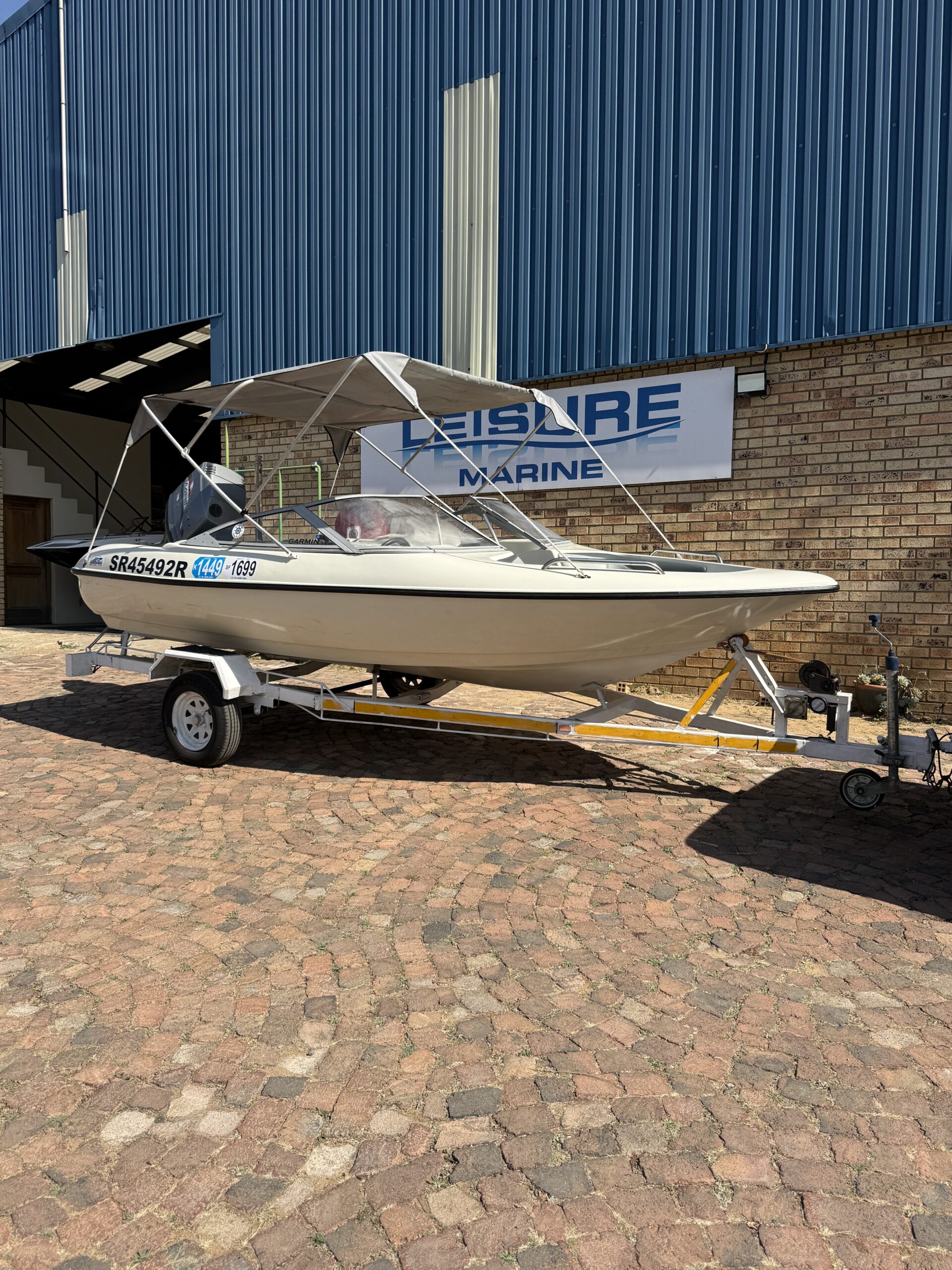
2010 Viking Velocity
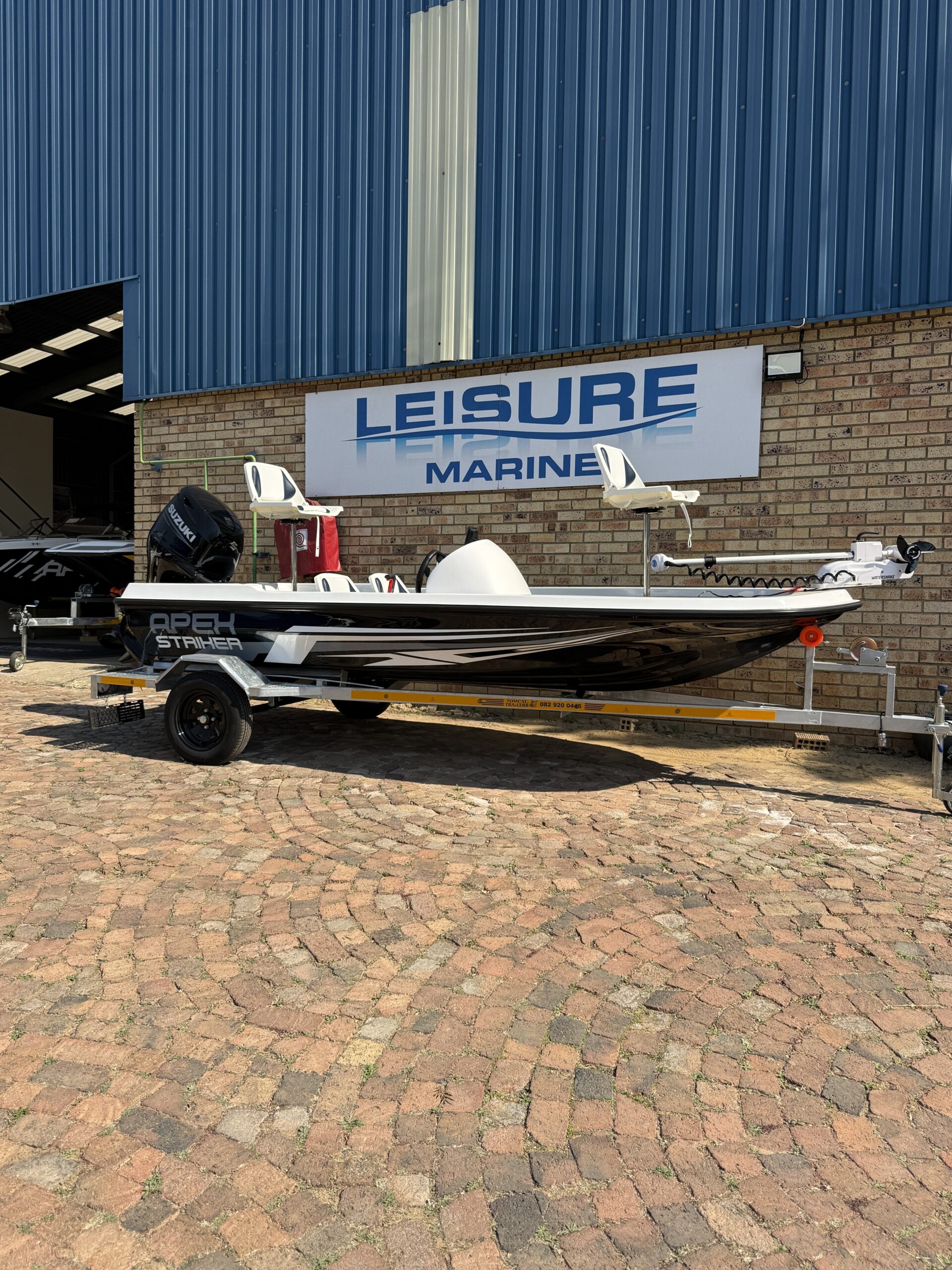
2026 Apex Striker
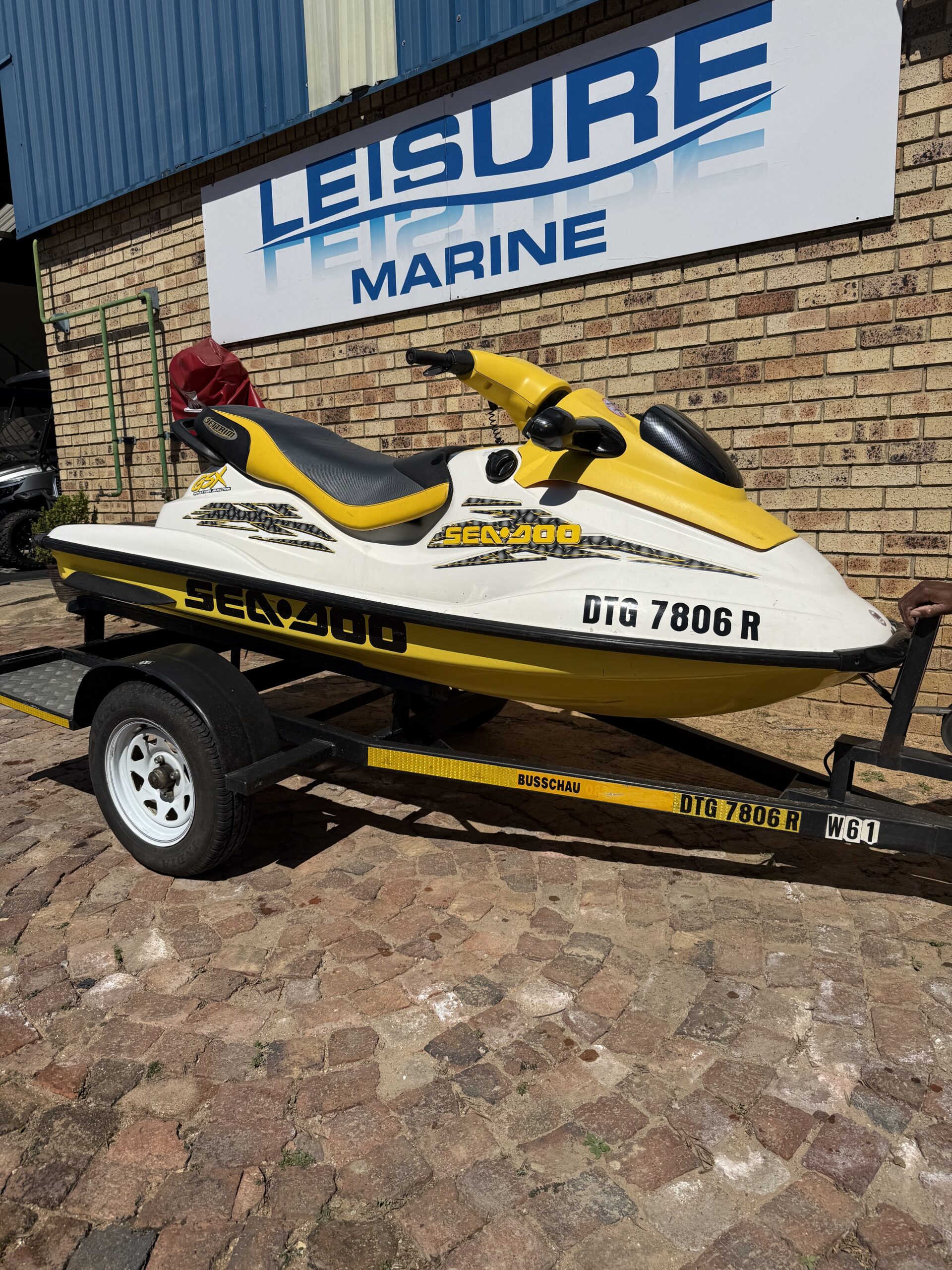
2000 Sea-Doo GSX





Reviews