 Trailers
 Buses
Buses
 Tractors
 Rollers
 Cranes
 Loaders
 Graders
 Forklifts
 Dozers
 Excavators
 Boats
Boats
 Caravans





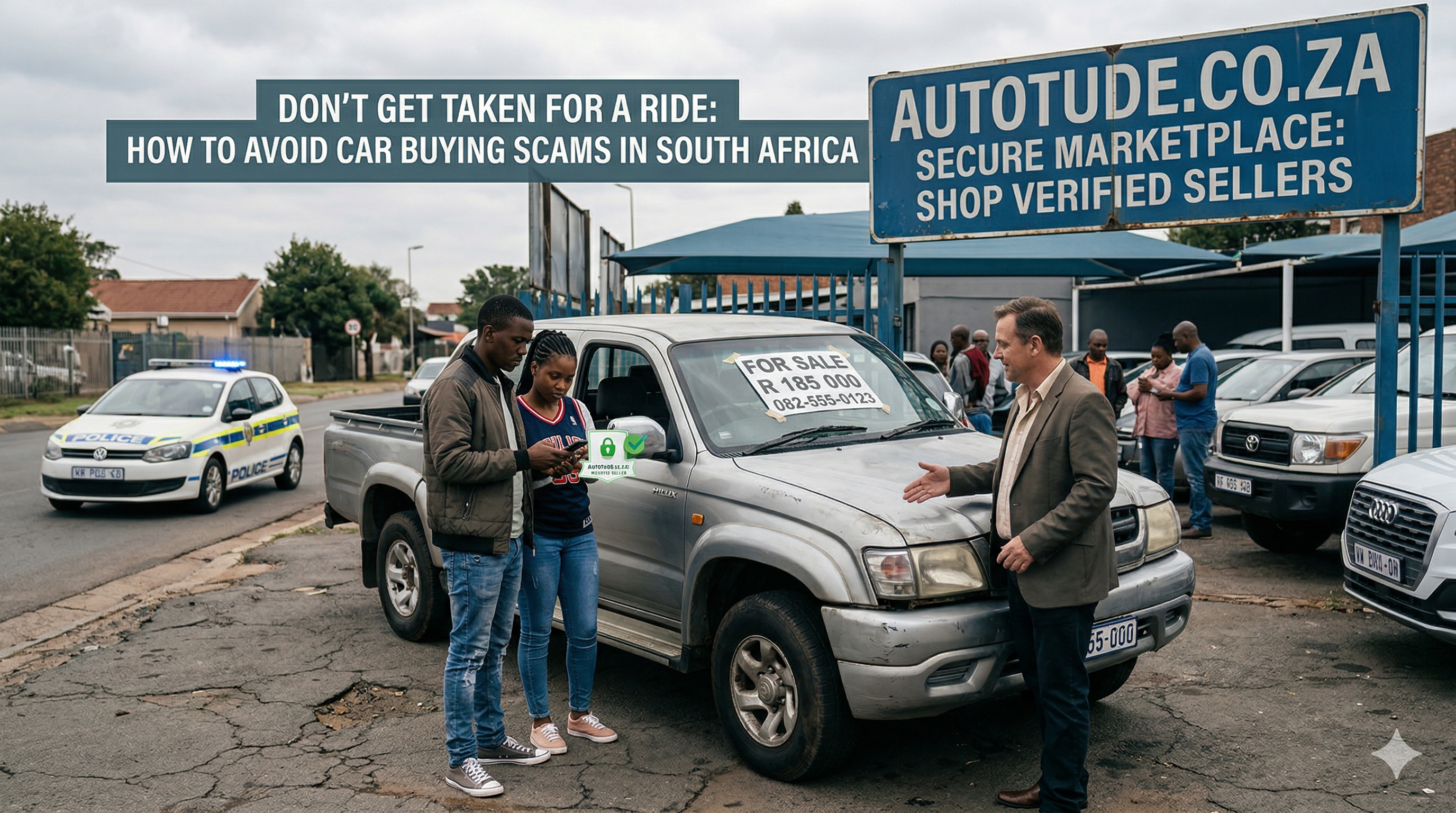
Don’t Get Taken for a Ride: How to Avoid Car Buying Scams in South Africa
Buying a car in South Africa should be an exciting time. It’s that feeling of freedom, the open road, and the smell of that “new car” scent (even if it’s just new to you). But let’s be honest, it can also feel like navigating a minefield.
We’ve all heard the horror stories: a friend of a friend who paid a deposit for a sleek BMW only to find out the “seller” vanished into thin air, or that colleague who bought a bakkie that turned out to be a “cloned” vehicle with a dark past.
The truth is, scammers in South Africa are incredibly sophisticated. They prey on our excitement and our desire for a good deal. But don’t worry—you don’t need to be a mechanic or a lawyer to protect yourself. You just need to know what to look for.
Here are the most common car buying scams in South Africa, and exactly how to avoid them.
1. The “Too-Good-To-Be-True” Online Deal
We all love a bargain, and websites like Facebook Marketplace, Gumtree, and AutoTrader are great places to start. But this is also where scammers thrive. You’ll see an ad for a 2022 VW Polo—one of the most stolen cars in the country—for half its market value. The photos are glossy, the description is detailed, and your heart skips a beat.
How the scam works: The “seller” will claim they are relocating overseas, going through a divorce, or urgently need cash. They’ll insist on a deposit before you can view the car to “secure” it because “ten other people are interested.” Once you send that deposit via instant EFT or cash send, they disappear. There was never a car.
How to avoid it:
-
Trust your gut: If the price is suspiciously low, it’s a trap. No one sells a nearly new car for R50,000 out of the goodness of their heart.
-
See before you pay: The golden rule in South Africa is: No view, no pay. Never, ever pay a deposit without physically inspecting the car at a physical address (preferably the seller’s home or a reputable dealership).
-
Meet in a safe place: If a seller refuses to let you come to their home or office and insists on meeting in a parking lot, walk away.
2. The “Code 3” Cloned Car
This is one of the most dangerous scams because it’s almost invisible to the untrained eye. A car that has been written off (Code 3) due to an accident or flood damage, or one that was stolen, is given a new identity.
How the scam works: The scammer buys a written-off vehicle at an auction. Then, they find a legitimate car of the same make, model, and colour. They steal the legitimate car’s VIN number (the unique chassis number) and license plate, and physically re-stamp the stolen chassis number onto the written-off car. You buy the “clone” thinking it’s clean, but you’re driving a car that is effectively stolen.
How to avoid it:
-
Do an independent background check: This is non-negotiable in South Africa. Before handing over a cent, use a service like VIN Check, TransUnion, or iTrader to run a full history check. You’ll need the VIN (found on the dashboard or driver’s door jamb).
-
Check for tampering: Look at the VIN plate on the dashboard. Does it look crooked? Is it glued on instead of riveted? Are the numbers perfectly aligned? Factory stampings are precise; amateur re-stampings often look messy.
-
Look for “ghost” marks: On the window glass, you’ll usually see the VIN etched. If the windows are brand new but the car is three years old, that’s a massive red flag.
3. The “I Know a Guy” Financing Scam
You’ve got a less-than-perfect credit score, and you’re desperate for a car. A private seller or a shady “dealership” (often just a guy with a few cars on a pavement) tells you not to worry. “I know a guy at the bank,” they say. “We can get you financed, no problem.”
How the scam works: The seller offers “in-house financing” or claims they can arrange a loan for you. They ask you to pay an “admin fee” or “initiation fee” upfront to secure the financing. Alternatively, they get you to sign a contract that looks like a bank loan but is actually a private, high-interest loan with severe terms. You pay the fee, the car is never delivered, or you end up paying double the car’s value in interest.
How to avoid it:
-
Only deal with registered credit providers: Legitimate banks (like Nedbank, FNB, Absa, Standard Bank) or reputable vehicle finance companies do not charge upfront “initiation” fees to the buyer. These fees are built into the loan.
-
Check the dealership’s credentials: If it’s a dealership, they must be registered with the National Consumer Commission (NCC) and have a physical FSP (Financial Service Provider) license. Ask to see it.
-
Walk away from “guaranteed” approval: If someone promises to get you a loan without pulling your credit record first, they’re either lying or running a scam.
4. The Odometer Rollback
You find a car that looks immaculate—a 2016 Toyota Fortuner with only 80,000 km on the clock. It feels like a steal. Unfortunately, the odometer has been “clocked” (rolled back), and the car actually has 280,000 km on it.
How the scam works: A dishonest seller uses a simple electronic tool to change the digital odometer reading. This is alarmingly common in South Africa, especially on high-demand vehicles like SUVs and luxury sedans. You buy the car thinking it has low mileage, only to face massive mechanical failures a few months later.
How to avoid it:
-
Check the service history: A legit service book will have dates and mileage stamps. Look for consistency. If the service at 60,000 km was in 2019, and the current odometer reads 80,000 km in 2024, that’s suspicious. The car likely did way more mileage in those five years.
-
Look at wear and tear: Does the driver’s seat have a worn-out bolster and a saggy cushion? Is the steering wheel leather shiny and smooth? Does the gear lever look like it’s been touched a million times? If the odometer says 80,000 km but the interior looks like a 200,000 km car, trust the interior.
-
Use a history check: Some history checks (like VIN Check) will show previous odometer readings from when the car was last sold or serviced at a major dealership.
5. The “Sorry, Cash Only” Pressure Sale
You find a car at a dealership (or a private seller) and you’re ready to do the deal. You want to do a bank transfer or pay by credit card for the safety it provides. The seller insists on cash or a direct cash deposit into their personal account. They start applying pressure: “If you don’t take it now, another buyer is coming with cash in an hour.”
How the scam works: By demanding cash, the scammer removes all digital traceability. If the car is stolen, has outstanding finance, or if the seller simply disappears, you have no recourse. If it’s a fake dealership, you’ll find the “office” empty the next day.
How to avoid it:
-
Bank transfers only (to a verified account): If dealing with a private seller, use a bank transfer that clearly states the purpose. If it’s a dealership, the payment must go into the business’s trust account, not an individual’s personal account.
-
Get a paper trail: Ensure you get a receipt that includes the dealership’s name, address, VAT number (if applicable), the car’s details, and the amount paid.
-
Don’t give in to pressure: A legitimate seller wants a safe transaction as much as you do. If they are rushing you, stop the deal.
Your Pre-Purchase Checklist
To wrap it all up, here is a simple checklist to keep in your pocket (or phone) before you hand over any money:
-
Do the VIN Check: Spend the R100 or R200. It’s the best money you’ll spend on the car. Check for outstanding finance, accident history, and if the car is reported stolen.
-
Physical Inspection is Key: Never buy a car sight-unseen. If you’re not mechanically minded, pay for a reputable company like Dekra or AA South Africa to do a pre-purchase inspection.
-
Meet at a Home or Business: Be wary of sellers who only want to meet in mall parking lots or petrol stations.
-
Check the Paperwork: Ensure the seller’s ID matches the name on the registration certificate (the RC1). If it’s a dealership, verify their registration with the Motor Industry Ombudsman of South Africa (MIOSA).
-
Never Pay a Deposit Without a Contract: If a deposit is required to “hold” the car, get a signed contract that clearly states the terms of the refund.
Buying a car in South Africa is a rite of passage. Don’t let the fear of scams ruin the joy. By staying vigilant, doing your homework, and listening to your gut, you can drive away with confidence—and a great story about the one you didn’t buy.
Safe driving!
Guides


Reviews