
 Trailers
 Buses
Buses
 Tractors
 Rollers
 Cranes
 Loaders
 Graders
 Forklifts
 Dozers
 Excavators
 Boats
Boats
 Caravans





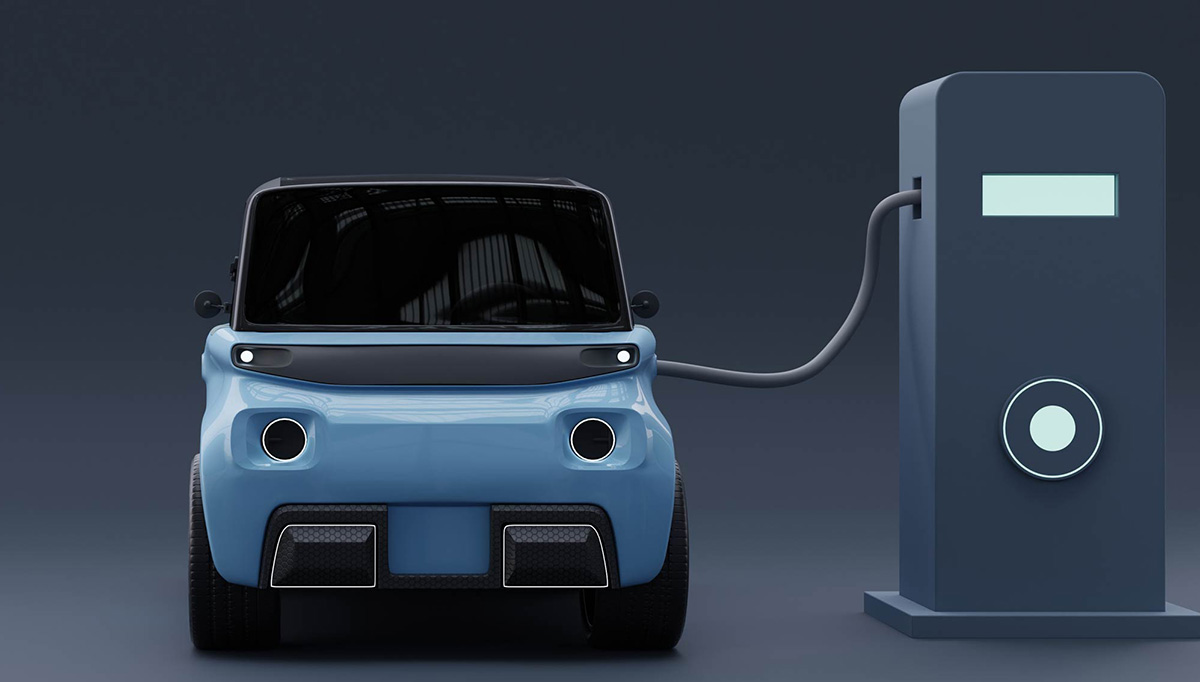
Will South Africa Introduce Subsidies for New Energy Vehicles
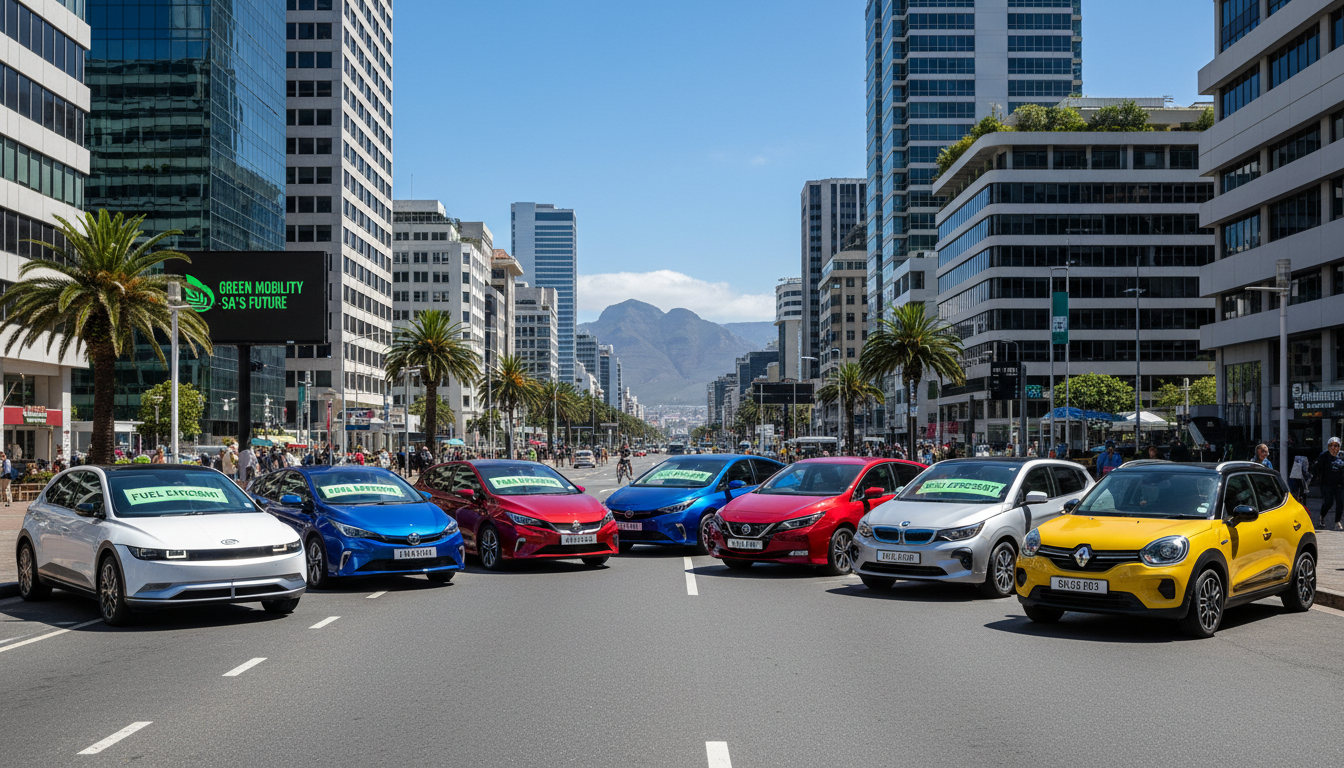
South Africa is moving towards a more supportive policy environment for new energy vehicles (NEVs), but motorists should not expect a straightforward consumer cash subsidy for buying an electric car just yet. Instead, government policy has so far concentrated heavily on encouraging local production and investment in electric and hydrogen-powered vehicles.
The question of whether South Africa will eventually introduce direct purchase subsidies remains important as the country attempts to increase electric-vehicle adoption, develop local manufacturing and remain competitive in a rapidly changing global automotive industry.
South Africa's Current Approach
Unlike countries that offer consumers rebates when purchasing an electric vehicle, South Africa's existing strategy has largely focused on manufacturers. The government has introduced incentives designed to encourage companies to invest in local NEV production rather than simply reducing the retail price paid by consumers.
The Automotive Investment Scheme (AIS), administered by the Department of Trade, Industry and Competition, provides financial support for qualifying automotive investment. The programme includes grants for manufacturers investing in productive assets and aims to increase production, sustain employment and strengthen the automotive value chain. (DTIC)
More recently, government has introduced a specific incentive for battery-electric and hydrogen-powered vehicle production. Under the new framework, qualifying manufacturers can claim a 150% deduction on eligible investment in production capacity.
The 150% NEV Production Incentive
The most significant development is the introduction of the new production investment allowance for battery-electric and hydrogen-powered vehicles.
The incentive applies to qualifying assets brought into use from 1 March 2026 and before 1 March 2036. It allows eligible manufacturers to claim 150% of qualifying investment spending on production buildings, machinery, plant and related assets used mainly to produce battery-electric or hydrogen-powered vehicles in South Africa. (South African Revenue Service)
The measure is intended to encourage vehicle manufacturers to invest in local electric-vehicle production rather than relying exclusively on imported vehicles.
National Treasury previously estimated the cost of the incentive at approximately R500 million for the 2026/27 tax year. (National Treasury of South Africa)
This is significant because South Africa's automotive industry is heavily export-oriented. Encouraging local NEV production could help manufacturers transition their factories towards the technologies increasingly demanded by international markets.
But This Is Not a Consumer Subsidy
For South African motorists, there is an important distinction between a production incentive and a purchase subsidy.
A production incentive benefits manufacturers that invest in qualifying local facilities. It does not mean that a private buyer receives R50,000, R100,000 or another fixed amount directly when purchasing an electric vehicle.
This distinction is important because the retail price of an EV remains one of the biggest obstacles to wider adoption in South Africa.
Electric vehicles can have attractive running costs, but their initial purchase prices are often higher than those of comparable petrol-powered vehicles. Import duties, taxes, limited economies of scale and the cost of batteries can all contribute to higher retail prices.
A direct consumer incentive could potentially reduce that initial price barrier.
Why Government Is Hesitant
Introducing a large EV purchase subsidy would have significant implications for government finances. South Africa faces competing demands for public spending, meaning any new vehicle subsidy would have to be carefully designed and funded.
There is also the question of fairness. A large proportion of South African vehicle buyers purchase relatively affordable used cars rather than expensive new vehicles. A subsidy focused exclusively on new EVs could therefore primarily benefit wealthier consumers who can already afford new vehicles.
Government would need to determine whether a consumer subsidy offers better economic and environmental returns than investing in charging infrastructure, local manufacturing, public transport and industrial development.
There is also a strong argument for supporting hybrids and plug-in hybrids as part of a broader transition. Toyota, for example, has argued that government should have introduced incentives for hybrids and plug-in hybrids alongside its efforts to promote new-energy vehicles. (News24)
The Cost of Imported EVs
Another challenge is that South Africa imports many of the electric vehicles currently available to consumers. If government simply introduced a blanket purchase subsidy, some of that financial support could effectively flow towards imported vehicles and overseas manufacturers.
A locally focused incentive, by contrast, can encourage investment, employment, skills development and supplier growth within South Africa.
This is one reason the current policy emphasis is understandable. Government wants to make South Africa a competitive manufacturing base for the next generation of vehicles rather than turning the country into an increasingly import-dependent EV market.
InvestSA currently describes the country's automotive incentive framework as including targeted support for NEV production, with the broader system combining production incentives, investment support and the new NEV production allowance. (Invest SA)
Could a Consumer Subsidy Come Later?
A direct consumer incentive cannot be ruled out. As the global automotive industry moves rapidly towards electrification, pressure on South Africa to accelerate domestic EV adoption is likely to increase.
The International Energy Agency reported that global electric-car sales exceeded 20 million units in 2025, with electric vehicles accounting for approximately one in four new cars sold worldwide. South Africa is still at a much earlier stage, although its EV market is growing. The country recorded approximately 3,800 electric-car sales in 2025, according to the IEA. (IEA)
If the gap between South Africa and international markets becomes strategically important, government may eventually consider additional incentives aimed directly at consumers.
Such a programme could take several forms. Instead of a universal cash rebate, government could reduce import duties on qualifying EVs, offer tax incentives, provide registration-fee reductions or introduce targeted rebates for lower-priced electric vehicles.
Another possibility would be incentives linked to locally produced vehicles. This could encourage consumers to purchase South African-built EVs while simultaneously supporting domestic manufacturing.
Charging Infrastructure Will Also Matter
Even a generous subsidy would not solve every obstacle facing South African EV buyers.
Charging infrastructure remains critical. Consumers need confidence that they can charge their vehicles at home, at workplaces and during longer journeys.
Government and private companies will therefore need to expand charging networks alongside vehicle adoption. Faster and more widely distributed charging could make electric vehicles significantly more attractive to motorists who currently worry about range and charging availability.
What South African Buyers Should Expect
For now, buyers should not purchase an electric vehicle expecting to receive a government cash rebate. The country's established policy direction is focused more strongly on supporting manufacturers and building an automotive industry capable of producing NEVs locally.
The 150% investment allowance introduced from March 2026 represents a major step in that direction. It gives manufacturers a stronger financial incentive to invest in electric and hydrogen-powered vehicle production in South Africa. (South African Revenue Service)
However, as EV adoption increases and the global automotive industry continues its transition, the pressure for consumer-focused incentives could grow.
The Road Ahead
South Africa is unlikely to ignore the global shift towards new energy vehicles. The automotive industry is too important to the country's economy, exports and manufacturing base for electrification to be treated as a distant issue.
The immediate priority appears to be creating conditions that encourage manufacturers to build NEVs locally. Direct consumer subsidies may become part of the strategy later, but there is currently no broad national cash rebate for ordinary motorists buying new electric vehicles.
Ultimately, the success of South Africa's NEV transition will depend on more than subsidies. Competitive vehicle prices, reliable charging infrastructure, local production, skilled workers and sensible tax policy will all be required.
For motorists, the next few years could therefore bring significant changes. If government succeeds in attracting more NEV production and EV prices continue to fall globally, electric vehicles could gradually become more accessible even without a traditional consumer subsidy. A direct purchase incentive remains possible, but for now, South Africa's strongest NEV support is aimed at building the vehicles rather than subsidising the people who buy them.
Guides




Reviews

0 Comments
Post Comment