
 Trailers
 Buses
Buses
 Tractors
 Rollers
 Cranes
 Loaders
 Graders
 Forklifts
 Dozers
 Excavators
 Boats
Boats
 Caravans





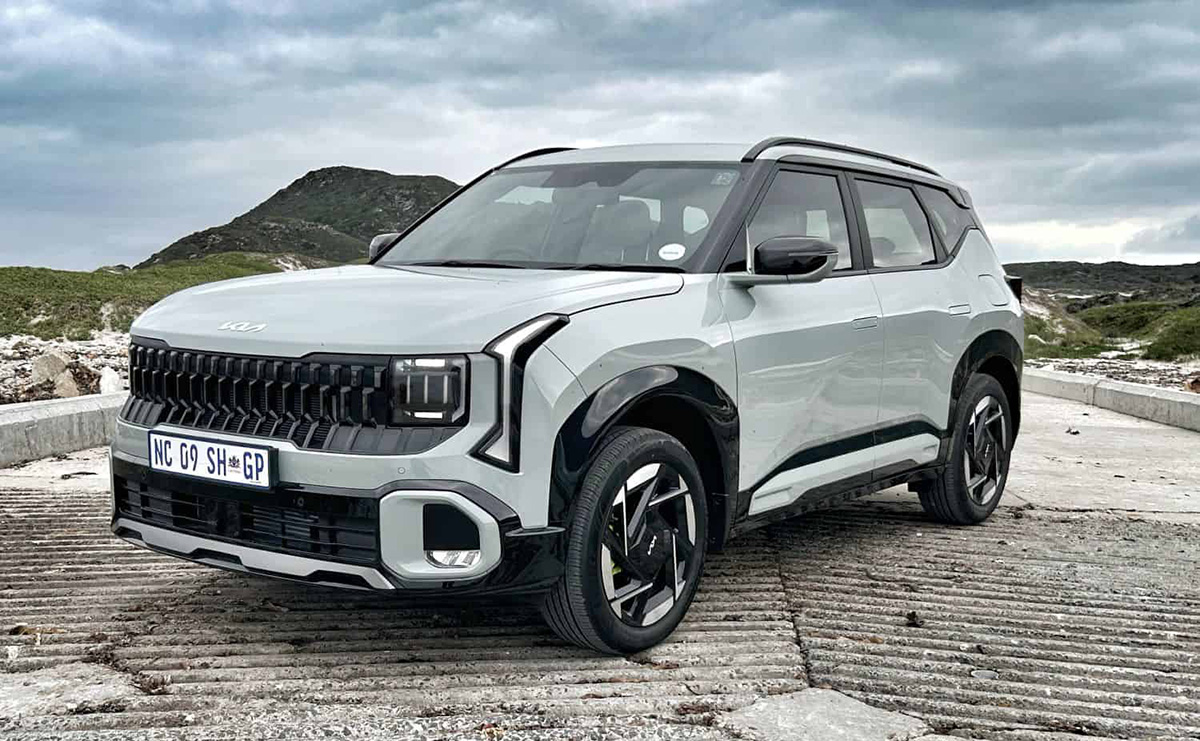
What safety features does the Kia Seltos have
The second-generation Kia Seltos has arrived in South Africa with a comprehensive range of safety features designed to protect occupants and help drivers avoid accidents. Available in five local grades—LS, LX, GT-Line, GT-Line S and X-Line—the Seltos combines conventional safety equipment with advanced driver-assistance technology on higher-specification models. Importantly, Kia provides a strong safety foundation across the range, rather than reserving every important feature for the most expensive version.
Six Airbags as Standard
One of the most important safety features in the Kia Seltos is its six-airbag system, which is fitted across the range. The system consists of dual front airbags, front side airbags and full-length curtain airbags.
The front airbags are designed to help protect the driver and front passenger during a collision, while the side airbags provide additional protection during side impacts. Curtain airbags extend along the cabin to provide protection for occupants in the event of certain side collisions or rollovers.
Having six airbags as standard is particularly valuable because buyers do not have to move to a higher trim level simply to access the basic airbag protection expected from a modern SUV.
Stronger Body Structure
Safety does not depend only on airbags and electronic systems. The Seltos is built on Kia's newer K3 platform and uses an ultra-high-strength steel structure designed to improve cabin rigidity.
A strong passenger compartment forms an important part of a vehicle's passive safety system. In a serious collision, the vehicle's structure is designed to help manage crash forces while maintaining the integrity of the occupant area.
This structural approach works together with the airbags, seat belts and other restraint systems to provide occupants with multiple layers of protection.
Electronic Stability Control
Electronic Stability Control, or ESC, is another standard feature. The system is designed to help the driver maintain control when the vehicle begins to lose traction or deviate from its intended path.
For example, during an emergency manoeuvre or when travelling on a slippery surface, the vehicle may begin to skid. ESC can intervene by selectively applying braking force and managing vehicle behaviour to help restore stability.
This is particularly useful for an SUV that may encounter different road conditions, including wet South African roads and uneven surfaces.
Anti-Lock Braking System
The Seltos also comes with an Anti-lock Braking System (ABS). During heavy braking, ABS helps prevent the wheels from locking completely.
Wheel lock-up can make it more difficult for a driver to maintain steering control during an emergency stop. ABS instead allows the system to regulate braking pressure, helping the driver retain the ability to steer while slowing down.
The Seltos combines ABS with other electronic braking and stability systems to provide a more comprehensive active-safety package.
Hill Start Assist
Hill Start Assist Control is another standard feature across the new Seltos range. It is designed to prevent the vehicle from rolling backwards when starting on an incline.
This can be particularly useful when pulling away from a stop at a steep intersection, parking area or driveway. The system temporarily assists the driver while they move from the brake to the accelerator.
Although it is primarily a convenience feature, Hill Start Assist can also reduce the risk of unintentionally rolling into another vehicle or road user.
Tyre Pressure Monitoring
The Seltos is fitted with a Tyre Pressure Monitoring System (TPMS), which alerts the driver when tyre pressure drops.
Maintaining the correct tyre pressure is important for braking, handling, fuel consumption and overall vehicle stability. A significantly underinflated tyre can affect how a vehicle responds, particularly during emergency manoeuvres.
The TPMS therefore provides an additional layer of driver awareness by helping identify potential tyre-pressure problems before they become more serious.
Rear-View Camera and Parking Sensors
Every Seltos also receives a rear-view camera with dynamic guidelines, making reversing and parking easier.
The camera provides the driver with a view behind the vehicle, while dynamic guidelines can help indicate the vehicle's projected direction when steering. Rear parking sensors are also included, helping warn the driver when obstacles are close to the rear of the vehicle.
The LX and higher versions add front parking sensors, giving drivers additional assistance when manoeuvring in tight spaces.
These systems are particularly useful in shopping-centre parking areas, garages and busy urban environments where pedestrians and other vehicles may be difficult to see.
ISOFIX Child-Seat Anchors
Families will also appreciate the inclusion of ISOFIX child-seat anchorage points on the outer rear seats.
ISOFIX provides a secure and convenient method of attaching compatible child seats to the vehicle. Correctly installing a child seat is an important part of protecting younger passengers, and dedicated anchorage points can make installation easier and more consistent.
The Seltos therefore provides important child-occupant protection alongside its adult occupant safety systems.
Advanced Driver Assistance Systems
The biggest safety upgrade comes with the range-topping GT-Line S and X-Line models. These versions receive Kia's more comprehensive Advanced Driver Assistance Systems (ADAS) package.
Forward Collision-Avoidance Assist is designed to monitor the road ahead for potential collision risks involving vehicles, pedestrians or cyclists. If the system detects an increasing risk, it can warn the driver and, under appropriate conditions, apply emergency braking.
Smart Cruise Control with Stop & Go is also available on these models. Unlike conventional cruise control, it can maintain a selected following distance from the vehicle ahead. It can also slow the Seltos in traffic and bring it to a stop before assisting with moving away again.
Blind-Spot and Lane Assistance
Blind-Spot Collision-Avoidance Assist provides another useful layer of protection. It monitors areas behind and to the side of the vehicle that can be difficult for the driver to see using the mirrors.
If the system detects a potential collision risk while the driver attempts to change lanes, it can provide warnings and intervene where appropriate.
Lane Keeping Assist is designed to provide steering assistance if the vehicle begins drifting from its lane without the driver's intention. Lane Following Assist goes further by helping keep the vehicle centred between lane markings during suitable driving conditions.
Safety Across the Range
One of the Kia Seltos's biggest strengths is that safety is not limited to the flagship models. All versions receive six airbags, ESC, ABS, Hill Start Assist, tyre-pressure monitoring, a rear-view camera and ISOFIX mounting points.
Higher grades progressively add parking assistance and convenience-related safety features, while the GT-Line S and X-Line introduce the most sophisticated ADAS technology.
Overall, the Kia Seltos offers a well-rounded safety package for South African buyers. Its combination of strong structural protection, airbags, electronic stability systems, parking assistance and advanced driver aids makes safety one of the SUV's strongest selling points. Buyers considering the range should nevertheless compare the individual trims carefully, because the most advanced collision-avoidance and lane-assistance technologies are reserved for the top versions.
Guides






Reviews


0 Comments
Post Comment