 Trailers
 Buses
Buses
 Tractors
 Rollers
 Cranes
 Loaders
 Graders
 Forklifts
 Dozers
 Excavators
 Boats
Boats
 Caravans





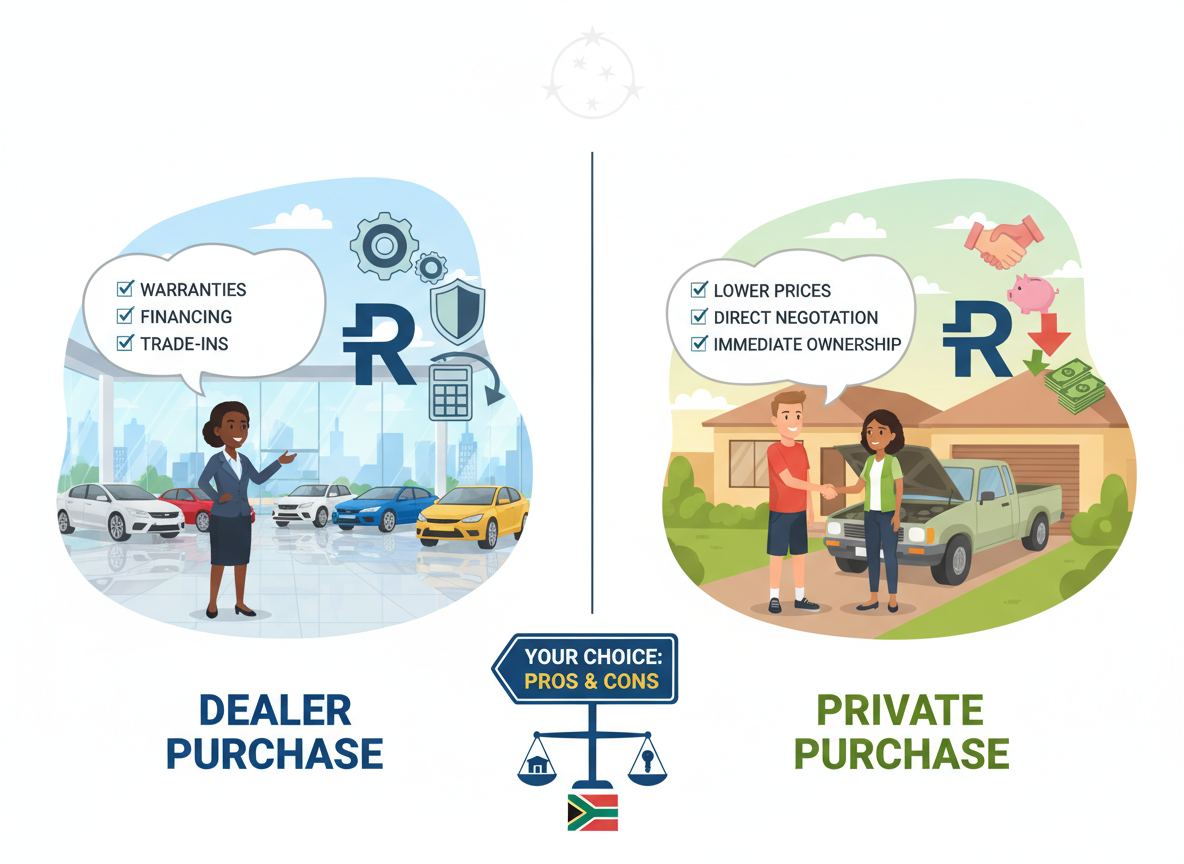
Dealer vs. Private Car Purchase: The Ultimate Guide to Pros and Cons
The moment you decide to buy a used car, you are faced with a fundamental question: Should you buy from a dealership or from a private seller? It is the classic fork in the road for car buyers. On one side, the dealership promises security and convenience, often at a higher price. On the other, the private seller advertises a bargain, but with a hefty dose of "buyer beware."
To help you navigate this decision, we have analyzed expert opinions from MotorTrend, The Car Expert, and financial guides to present a comprehensive, detailed comparison of the pros and cons of each path .
Navigating the South African car market in 2025 presents buyers with a fundamental choice: should you buy from a professional dealership or take a chance on a private seller? With economic pressures making every rand count and the used car market booming, this decision is more critical than ever. This comprehensive guide breaks down the pros and cons of each path, providing you with the insights needed to make a confident and informed decision .
Buying from a Dealership: The Pros and Cons
Purchasing from a registered dealer is often described as the "peace of mind" option . This is because dealerships are regulated and built to provide a comprehensive service, albeit at a higher cost.
✅ The Advantages: Why Choose a Dealer?
-
Legal Protection and Recourse: This is the single biggest advantage. When you buy from a dealer, you are protected by the Consumer Protection Act (CPA) . This means the dealer is legally obliged to guarantee the vehicle is not stolen, has no outstanding finance, and must rectify any known defects. If something goes wrong shortly after the sale, you have legal rights to demand a repair or refund .
-
Warranties and Guarantees: The vast majority of dealerships include a warranty with their used cars . This covers you against unexpected mechanical failures for a set period. You can often also purchase an extended warranty for even longer coverage, turning an unpredictable used car into a more manageable expense .
-
Verified Vehicle History and Quality: Reputable dealers conduct thorough inspections and provide history reports. They ensure the car is roadworthy and fix issues before putting it up for sale. This transparency builds trust and saves you from discovering hidden problems later .
-
Hassle-Free Finance and Paperwork: Dealerships have dedicated finance and insurance (F&I) departments that will handle the entire application process. They shop around with various banks to find you a competitive rate and handle all the administrative work, which is especially helpful for first-time buyers . They also manage the ownership transfer, saving you a trip to the traffic department .
-
After-Sales Support and Trade-Ins: If you have a problem, you have a physical business to return to. Dealerships also accept trade-ins, simplifying the process of selling your current vehicle and using its value towards the new one .
❌ The Disadvantages: The Downsides of Dealerships
-
Higher Purchase Price: Dealership prices are typically 15-25% higher than private sales. This premium covers their overheads, such as showroom costs, staff salaries, marketing, and the cost of preparing the car for sale .
-
Limited Negotiation: While you can still negotiate, there is often less flexibility on price. The listed price includes the built-in costs mentioned above, leaving less "wiggle room" for the salesperson .
-
Aggressive Sales Tactics: Some buyers find dealership environments to be high-pressure, with persistent sales reps focused on closing a deal. This can make the process feel less relaxed than dealing with a private individual .
Buying from a Private Seller: The Pros and Cons
Buying privately is the "value and vigilance" option. You have the chance to get a great deal, but only if you are willing to put in the work and accept the risks.
✅ The Advantages: Why Go Private?
-
Lower Price and Better Value: Private sellers don't have the overheads of a dealership, so they can afford to ask for less. On average, you can expect to pay significantly less for the same car, making this the best route for budget-conscious buyers .
-
More Room for Negotiation: Private sellers are often motivated to sell quickly and are much more flexible on price. A respectful, cash-ready buyer can often secure a substantial discount .
-
Direct Insight from the Owner: You get to speak directly to the person who drove the car. This allows you to ask detailed questions about its history, driving habits, maintenance, and the real reason for the sale—information you'd never get from a dealership .
-
Relaxed Atmosphere: The transaction is usually more casual and less pressured than dealing with a commissioned salesperson .
❌ The Disadvantages: The Risks of Private Sales
-
Major Risk Factor: "Voetstoks" : In South Africa, private sales are almost always "voetstoks" (as-is). This means you are buying the car in its current condition with all its faults, known or unknown. The Consumer Protection Act does not cover private sales, so if the engine fails the day after you buy it, you have no legal right to a refund or repair .
-
Scams and Safety Concerns: The private market is a hunting ground for scammers selling stolen cars, "chipped" (mileage tampered) vehicles, or cars with outstanding finance. Furthermore, meeting strangers to view cars comes with inherent personal safety risks .
-
No Warranty: You get no warranty. Any problem that arises after the sale is 100% your financial responsibility .
-
Paperwork and Financing Burden: You are responsible for every aspect of the transaction. This includes:
-
Financing: Banks generally do not finance private sales through standard vehicle finance. You would likely need to secure a more expensive personal loan .
-
Administration: You must handle the vehicle history checks (eNatis, outstanding finance), draft a sales agreement, and personally register the car in your name at the traffic department .
-
Crucial Tips for a Safe Private Purchase
If you decide the potential savings are worth the effort, following a strict safety protocol is non-negotiable.
-
Do Your Homework: Research the market value on sites like Cars.co.za or AutoTrader. If a deal seems too good to be true, it probably is .
-
Ask the Right Questions: Before viewing, ask about ownership history, accident history, outstanding finance, and service records. Be wary of sellers who refuse to answer calls .
-
Prioritise Safety: Always meet in a busy, public place during daylight. Bring a friend or family member and let someone know your location .
-
Conduct a Professional Inspection: Never rely on your own eyes alone. Pay for an independent inspection by a service like DEKRA or a trusted mechanic. This small cost can save you from a disastrous purchase .
-
Verify All Paperwork: Check that the VIN and engine number on the car match the registration papers. Ask for a valid roadworthy certificate and a full service history. You can also verify the vehicle's status with the police .
-
Secure Payment: Avoid cash. Use an Electronic Funds Transfer (EFT) to create a paper trail. Never pay a deposit before seeing the car .
-
Get a Sales Agreement: Draft a simple contract detailing the parties, the car, the price, and the terms of sale (e.g., "sold voetstoks"). Both parties should sign .
-
Transfer Ownership Immediately: You must register the car in your name at the traffic department. Until this is done, you are not the legal owner .
Making the Final Decision
Your choice ultimately hinges on your personal priorities, budget, and risk tolerance.
-
Choose a Dealership if: You value peace of mind, want legal protection and a warranty, prefer a convenient and safe transaction, and are willing to pay a premium for these benefits. This is the ideal path for first-time buyers or those purchasing a vehicle as their primary, reliable means of transport .
-
Choose a Private Seller if: You are an experienced buyer with mechanical knowledge, have a strict budget and want the lowest possible price, have the time to do thorough research and inspections, and are comfortable managing the paperwork and risks yourself .
In the evolving South African market of 2025, information is your greatest asset. By weighing these pros and cons and following the necessary precautions, you can navigate the market with confidence and drive away in a car that truly suits your needs.
Guides








Reviews