
 Trailers
 Buses
Buses
 Tractors
 Rollers
 Cranes
 Loaders
 Graders
 Forklifts
 Dozers
 Excavators
 Boats
Boats
 Caravans





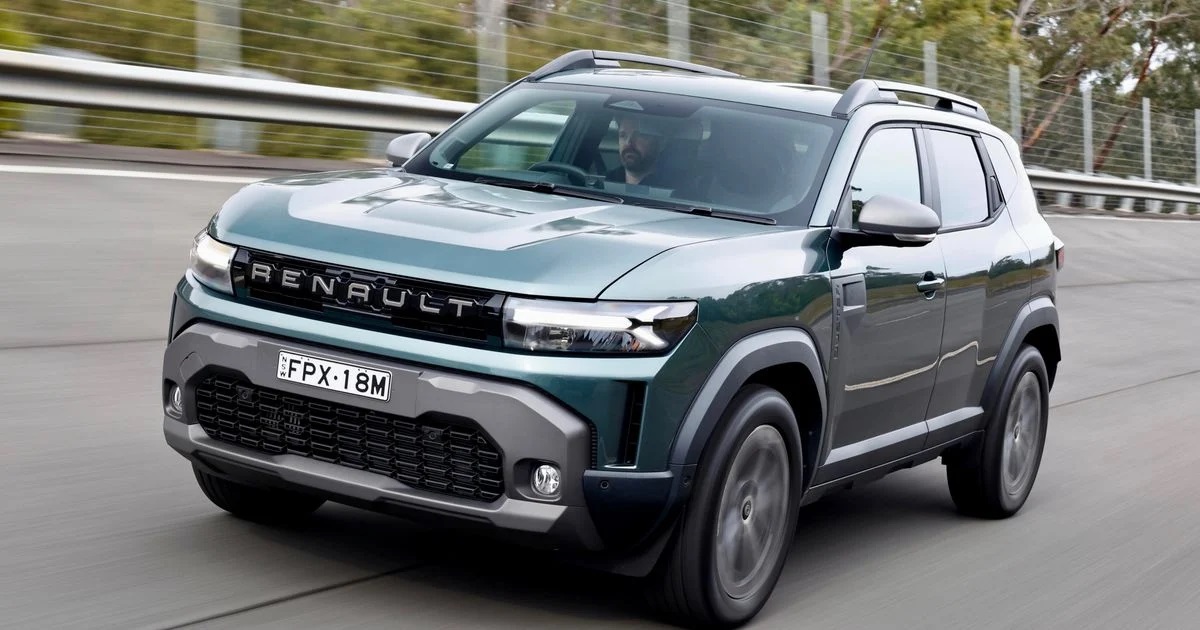
New Renault Duster (2026) First Drive Review
The Renault Duster has returned to South Africa with a fresh approach for 2026. Now sourced from Renault’s Chennai plant in India, the latest Duster combines a tougher-looking design, a modern platform, improved technology and a much more competitive starting price. The result is a compact SUV that aims to reclaim the value-focused position that helped make the Duster popular with South African buyers.
We drove the new Duster during its launch programme in the Western Cape, putting the latest generation through a mixture of urban roads and open-road driving. Here is what stood out.
A New Beginning for the Duster
The biggest change for the 2026 Duster is not immediately visible. The new model is based on Renault Group's CMF-B modular platform, which brings improvements in structural rigidity, refinement and electronic architecture. The platform also allows the Duster to accommodate modern driver-assistance and infotainment systems.
For South Africa, there is another important change: production has moved from Romania to India. This has had a major effect on pricing. The new range starts at R339,999 for the 1.0T Evolution, putting the Duster much closer to the mainstream compact-SUV market.
That is particularly significant because the previous European-sourced Duster had become increasingly expensive and faced intense competition from newer Chinese brands.
Tougher Styling
The Duster remains recognisable, but the latest generation has a considerably more modern appearance. It features a wide stance, chunky body cladding, Y-shaped lighting elements and pronounced wheel arches.
The design successfully retains some of the rugged character associated with the Duster while giving it a more sophisticated appearance. Depending on the derivative, buyers get 17- or 18-inch alloy wheels.
Ground clearance is an impressive 212mm, while the Duster has a 26.9-degree approach angle and 34.7-degree departure angle. Those numbers give the front-wheel-drive derivatives useful clearance for gravel roads and rougher tracks, even though the new locally introduced range does not include a 4x4 model.
Engines and Performance
The South African 2026 Duster range offers two turbocharged petrol engines.
The entry-level Evolution uses a 1.0-litre three-cylinder turbocharged engine producing 74kW and 160Nm. It is paired with a six-speed manual transmission.
The more powerful option is a 1.3-litre four-cylinder turbocharged petrol engine producing 116kW and 260Nm. It can be paired with either a six-speed manual or Renault's six-speed EDC dual-clutch automatic transmission.
The 1.3T EDC is particularly well suited to buyers who spend most of their time in urban traffic. The engine provides useful mid-range torque, while the automatic transmission makes commuting considerably easier.
During the launch drive, the 1.3T EDC felt energetic and responsive. Real-world fuel consumption was reported at approximately 6.4 to 7.4 L/100km, depending on driving conditions, while another launch evaluation recorded 7.3 L/100km.
These figures are encouraging for a petrol-powered SUV of this size, although actual consumption will depend heavily on traffic, driving style and road conditions.
What Is It Like to Drive?
Behind the wheel, the Duster feels substantially more mature than earlier versions. The CMF-B platform gives it a more refined character, while the suspension provides a good balance between comfort and control.
On gravel roads, the Duster remains composed and reassuring. Its generous ground clearance is particularly useful for South African conditions, where owners may regularly encounter potholes, uneven roads and gravel surfaces.
On tar, however, sharper imperfections can still make their way into the cabin. This is not necessarily a deal-breaker, but buyers looking for a particularly soft-riding crossover may find some competitors more comfortable.
The steering is easy to operate, making the Duster simple to manoeuvre around town. The 1.3T engine also gives the vehicle enough performance for highway overtaking and longer-distance driving.
A Major Improvement Inside
The cabin is one of the areas where the new Duster feels significantly more modern.
The dashboard incorporates a 10.1-inch infotainment touchscreen, while higher-specification models receive a 10.25-inch digital driver's display. Wireless Apple CarPlay and Android Auto are available, helping the Duster compete with technology-focused rivals.
Higher derivatives add features such as wireless smartphone charging, automatic climate control, keyless entry, an electronic parking brake and selectable driving modes.
The range-topping Iconic model goes considerably further, offering ventilated front seats, a panoramic sunroof and an electric tailgate.
There is also a practical approach to the cabin, with Renault retaining useful storage areas and its modular YouClip accessory system.
Space and Practicality
The Duster remains a practical family crossover. Boot capacity is 518 litres up to the parcel shelf and can reach 700 litres when measured to the roof, making it useful for luggage, shopping and recreational equipment.
Rear passenger space is less impressive. Taller adults may find legroom somewhat restricted when the front seats are positioned far back. This could be an important consideration for families who regularly carry adults in the second row.
Nevertheless, the generous boot and practical cabin make the Duster a useful everyday vehicle.
Safety and Technology
Safety equipment varies according to specification. The range includes six airbags, electronic stability control, hill-start assistance, rear parking sensors, a rear-view camera and tyre-pressure monitoring.
Higher derivatives add more advanced assistance systems. The Iconic includes features such as adaptive cruise control, autonomous emergency braking, lane-keeping assistance, lane-departure warning, traffic-sign recognition and driver-attention monitoring.
This means buyers can access substantially more safety technology without necessarily having to choose the most expensive model.
Pricing and Competition
The new pricing is arguably the Duster's biggest advantage.
The 2026 range starts at R339,999 for the 1.0T Evolution, rising to R379,999 for the 1.3T manual. The 1.3T EDC Techno costs R399,999, while the Techno+ is R439,999. The range-topping Iconic costs R499,999. The prices include a three-year/45,000km service plan and a five-year/150,000km warranty.
That puts the Duster into direct competition with several popular compact SUVs, including models from Kia, Toyota, Suzuki and increasingly numerous Chinese manufacturers.
Verdict
The 2026 Renault Duster is an important return to form for the French brand in South Africa. Moving production to India has allowed Renault to offer a substantially more accessible starting price, while the CMF-B platform gives the SUV a more sophisticated foundation.
The Duster is attractive, practical and capable enough for the majority of everyday South African driving conditions. Its 212mm ground clearance is a major advantage, while the 518-litre boot adds genuine family practicality.
The absence of a diesel engine and the lack of a new 4x4 derivative will disappoint some traditional Duster fans. However, for buyers wanting a modern compact SUV with strong equipment, useful ground clearance and competitive pricing, the new Duster deserves serious consideration.
Most importantly, Renault has addressed one of the biggest problems that affected the previous generation: price. With the 2026 Duster starting at R339,999, the model once again has a compelling value proposition in South Africa's fiercely contested SUV market.
Guides

Reviews


0 Comments
Post Comment