
 Trailers
 Buses
Buses
 Tractors
 Rollers
 Cranes
 Loaders
 Graders
 Forklifts
 Dozers
 Excavators
 Boats
Boats
 Caravans





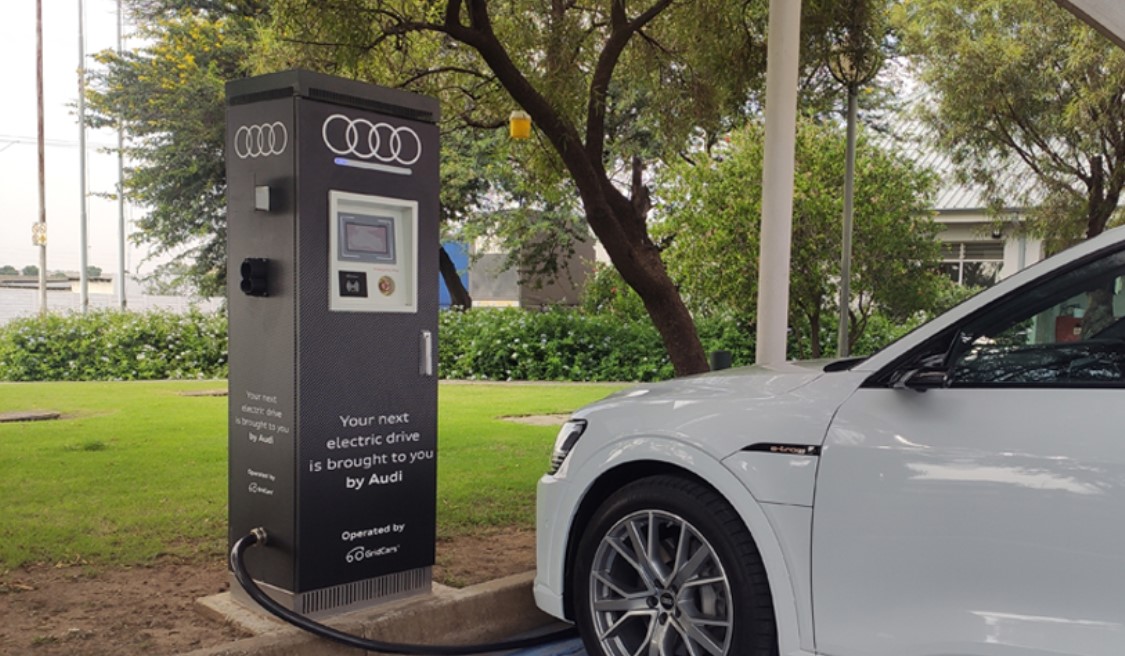
Is it cheaper to run an EV on Eskom power than a petrol car at R30 per litre?
South African motorists are facing an important question as fuel costs continue to put pressure on household budgets: is it cheaper to drive an electric vehicle (EV) using electricity from Eskom than to run a petrol car when petrol costs R30 per litre? The answer, in most cases, is yes. An EV can cost substantially less to operate per kilometre than a petrol-powered vehicle, even when it is charged using electricity from the national grid. However, the actual savings depend on the electricity tariff, the efficiency of the vehicle, where it is charged, and how far it travels.
To make a fair comparison, we need to look beyond the price of petrol and electricity and calculate how much each vehicle costs to travel the same distance.
Comparing the cost per kilometre
Consider a typical petrol car that consumes 7 litres per 100 kilometres. At R30 per litre, the calculation is straightforward:
-
Petrol consumption: 7 litres per 100 km.
-
Petrol price: R30 per litre.
-
Cost per 100 km: R210.
-
Cost per kilometre: R2.10.
Now consider an electric vehicle that consumes 18 kilowatt-hours (kWh) per 100 km. This is a reasonable illustrative figure for an everyday EV, although larger vehicles and high-speed driving can use more energy.
The cost of charging depends on the electricity tariff. For illustration, assume the EV uses 18 kWh per 100 km and compare three possible electricity prices.
Electricity price
Cost per 100 km
Cost per km
R2.00/kWh
R36
R0.36
R3.00/kWh
R54
R0.54
R4.00/kWh
R72
R0.72
These figures exclude charging losses. In practice, some electricity is lost when charging the battery, so the amount billed may be higher than the energy ultimately stored in the battery. Allowing for approximately 10% charging losses, the cost at R3.00/kWh rises from R54 to about R59.40 per 100 km, or roughly R0.59 per kilometre.
Even with this adjustment, the EV remains considerably cheaper to operate than the petrol car in this example.
What does this mean for your monthly budget?
The savings become more meaningful when we look at annual driving distances. Suppose you drive 1,500 km per month, or 18,000 km per year, and charge your EV at home.
Using a petrol car consuming 7 litres per 100 km and an EV consuming 18 kWh per 100 km, including charging losses:
Running cost
Petrol car
EV at R3.50/kWh
Cost per 100 km
R210.00
R63.00
Cost per month (1,500 km)
R3,150
R945
Cost per year (18,000 km)
R37,800
R11,340
EV calculations assume 18 kWh per 100 km measured at the electricity meter, including charging losses.
The EV saves approximately R2,205 per month, or R26,460 per year, on energy alone. Actual electricity prices vary by tariff and location, and Eskom's approved tariffs for the 2026/27 financial year took effect for its direct customers on 1 April 2026. Municipal tariffs can differ.
What if Eskom electricity becomes more expensive?
A common concern is that electricity prices will continue to increase. This is a legitimate consideration, but the EV can remain cheaper to run even at relatively high electricity prices.
At R4.50 per kWh, an EV consuming 18 kWh per 100 km costs R81 per 100 km. The petrol car in our example costs R210 for the same distance. The EV still saves R129 per 100 km, or approximately 61%.
The break-even electricity price is also revealing. With petrol at R30 per litre and consumption of 7 litres per 100 km, the petrol car costs R210 per 100 km. An EV using 18 kWh per 100 km would cost the same at an electricity price of approximately R11.67 per kWh.
In other words, electricity would need to cost about R11.67 per unit before the EV's energy cost matched that of the petrol car, assuming these consumption figures. That is considerably higher than many residential electricity tariffs, although public rapid charging can be more expensive than home charging.
The hidden costs: purchase price and maintenance
Energy costs are only one part of vehicle ownership. EVs may require less routine maintenance because they have fewer moving parts and do not need engine oil, spark plugs or conventional exhaust-system repairs. Regenerative braking can also reduce brake wear.
However, tyres still wear out, and battery condition, repair costs and warranty coverage matter. Installing a home charger may require additional expenditure, while relying on public fast chargers can reduce the savings.
The purchase price is particularly important. If an EV costs substantially more than an equivalent petrol car, the annual running-cost savings must be weighed against that difference. Depreciation, financing, insurance and the eventual resale value should all be included in a full ownership comparison.
Is charging from Eskom environmentally friendly?
An EV charged from Eskom's grid is not completely emissions-free. South Africa generates a substantial proportion of its electricity from coal, so charging an EV indirectly produces emissions at power stations.
Nevertheless, an EV has no tailpipe emissions while driving, and its overall environmental impact depends on electricity generation, vehicle manufacturing and lifetime mileage. Charging from rooftop solar can further reduce reliance on grid electricity, although solar equipment has its own installation and replacement costs.
Conclusion: Is an EV worth it at R30 per litre?
Yes, charging an EV from Eskom is generally cheaper than buying petrol at R30 per litre when comparing energy costs alone. For a typical petrol car consuming 7 litres per 100 km and an EV consuming 18 kWh per 100 km, home charging can deliver substantial savings—even at electricity prices of R3.50 to R4.50 per kWh.
For motorists who travel long distances, these savings can add up to tens of thousands of rand over several years. The financial case is strongest for people who can charge at home overnight, drive regularly and keep their vehicles for long enough to benefit from lower running costs.
The important distinction is between being cheaper to run and being cheaper to own. An EV may save money every time it travels a kilometre, but the final financial outcome depends on its purchase price, financing, insurance, depreciation and charging arrangements.
At R30 per litre, the economics of electric driving in South Africa are compelling. Eskom electricity does not need to be cheap for an EV to beat petrol on running costs; it simply needs to remain below the break-even price for the particular vehicles being compared.
Guides









Reviews


0 Comments
Post Comment