
 Trailers
 Buses
Buses
 Tractors
 Rollers
 Cranes
 Loaders
 Graders
 Forklifts
 Dozers
 Excavators
 Boats
Boats
 Caravans





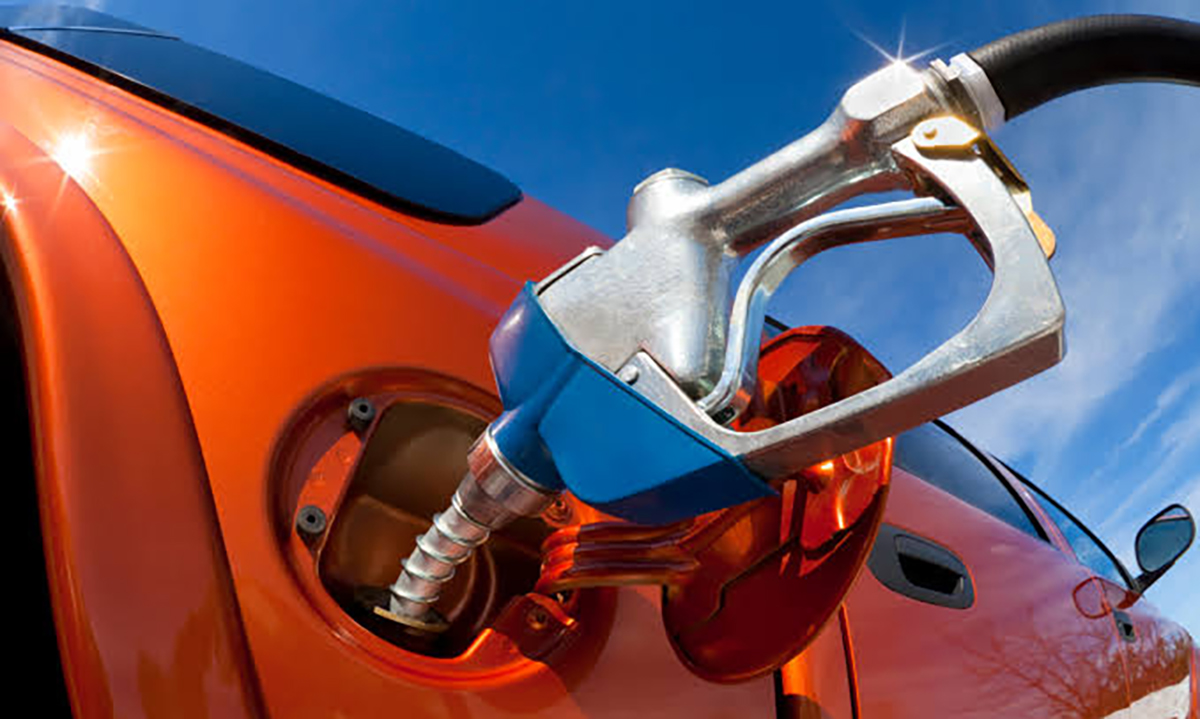
How to work out your car’s fuel consumption
Fuel consumption is one of the most important things to understand when owning a car. It affects how much you spend every month, how far you can travel between refuelling stops and, when buying a vehicle, whether it will fit comfortably within your budget. With fuel prices in South Africa changing regularly, knowing your car’s real-world fuel consumption can help you make better financial decisions.
Fortunately, calculating fuel consumption is relatively simple. You can use your car’s trip computer, calculate it manually using the amount of fuel you put into the tank, or monitor your consumption over several fill-ups. The result is usually expressed in litres per 100 kilometres (L/100km) or kilometres per litre (km/L).
What Does Fuel Consumption Mean?
Fuel consumption tells you how much fuel your vehicle uses to travel a certain distance. In South Africa, L/100km is one of the most common ways of displaying this information.
For example, if your car has a fuel consumption figure of 7.0 L/100km, it means the vehicle uses approximately seven litres of fuel to travel 100km under the conditions in which that figure was achieved.
When comparing L/100km figures, remember that a lower number is better. A vehicle using 6.0 L/100km is more fuel-efficient than one using 9.0 L/100km, assuming similar driving conditions.
Some cars instead display km/L. This tells you how many kilometres the vehicle can travel on one litre of fuel. In this case, a higher number is better.
Using Your Car’s Trip Computer
The easiest way to check fuel consumption is to use your vehicle's trip computer if it has one. Many modern cars can display average fuel consumption, distance travelled, average speed and estimated remaining range.
The displayed consumption figure can give you a useful indication of how efficiently your vehicle is operating. However, it should not necessarily be treated as a perfect measurement of your long-term real-world consumption.
For a more accurate result, compare the trip computer reading with your actual fuel usage at the petrol station. Record the distance travelled and the amount of fuel added each time you fill up. Doing this over several tanks will provide a better picture of your vehicle's normal fuel consumption.
Calculating Fuel Consumption Manually
The manual method is simple and requires only your trip meter or odometer and the litres shown on the fuel pump.
Start by filling your vehicle's fuel tank. Ideally, fill it to the same level each time. Reset the trip meter to zero, or record the vehicle's odometer reading.
Drive normally. There is no need to change your driving style, because the purpose is to determine how much fuel your car uses under your usual conditions.
At the next refuelling stop, fill the tank again. Take note of two figures: the number of kilometres travelled and the number of litres required to refill the tank.
The formula for L/100km is:
Fuel consumption = (Litres used ÷ Kilometres travelled) × 100
For example, suppose you drive 600km and use 50 litres of fuel.
50 ÷ 600 × 100 = 8.33 L/100km
Your vehicle therefore used approximately 8.33 litres for every 100km travelled.
Calculating Kilometres Per Litre
If you prefer to know how far your car travels on each litre, you can calculate km/L instead.
The formula is:
Kilometres per litre = Kilometres travelled ÷ Litres used
Using the previous example:
600 ÷ 50 = 12 km/L
This means the car travelled approximately 12km for every litre of fuel.
You can also convert between the two measurements. To convert L/100km to km/L, divide 100 by the L/100km figure.
For example:
100 ÷ 7.0 = 14.28 km/L
Therefore, a vehicle consuming 7.0 L/100km travels approximately 14.28km per litre. To convert km/L back to L/100km, divide 100 by the km/L figure.
Why the Fill-Up Method Is Useful
One of the best ways to determine real-world fuel consumption is to use the fill-up method consistently over several tanks.
Fill the tank completely, reset your trip meter and drive normally. When you refill, record the kilometres travelled and litres added. Repeat the process over several refuelling cycles.
This approach helps reduce the effect of unusual trips. For example, a single tank could be affected by heavy traffic, a long highway journey, towing, unusually cold weather or carrying a heavy load.
After several tanks, you can calculate the average. This gives you a much more useful figure for budgeting your everyday fuel costs.
Factors That Affect Fuel Consumption
Your car's fuel consumption can vary considerably depending on how and where you drive.
Driving in heavy urban traffic generally uses more fuel than steady highway driving because of frequent acceleration, braking and idling. Aggressive acceleration and high speeds can also increase fuel consumption.
The condition and load of the vehicle matter as well. Under-inflated tyres increase rolling resistance, while carrying unnecessary weight can make the engine work harder. Roof racks, trailers and heavy loads can also affect efficiency.
Vehicle maintenance is another important factor. Problems such as poor wheel alignment, worn components or overdue servicing can contribute to increased fuel consumption.
Manufacturer Figures Versus Real-World Consumption
When shopping for a new or used vehicle, you will often see an official fuel consumption figure in the specifications. This is useful when comparing vehicles, but your actual consumption may be different.
Official figures are generated under controlled testing conditions, while everyday driving involves traffic, hills, passengers, different weather conditions and varying driving styles. As a result, motorists should use official figures as a guide rather than a guarantee.
Your own fuel records are usually more valuable when calculating what the car will actually cost you to operate.
Calculating Your Fuel Costs
Once you know your average fuel consumption, you can estimate the cost of a journey.
For example, if your vehicle consumes 7.0 L/100km and you plan to drive 1,000km:
1,000 ÷ 100 = 10
10 × 7.0 = 70 litres
If fuel costs R28 per litre, the estimated fuel cost would be:
70 × R28 = R1,960
It is sensible to allow some extra money for traffic, detours, idling and additional local driving. AutoTrader recommends adding a buffer when budgeting for road trips.
Keep Track of Your Consumption
Calculating fuel consumption should not be something you do only once. Keeping a record of your fuel usage can reveal changes in your vehicle's efficiency.
If your car normally averages 7.0 L/100km but suddenly starts using 9.0 L/100km without a significant change in driving conditions, it may be worth investigating. Checking tyre pressures, servicing requirements and the vehicle's general condition could help identify the cause.
Ultimately, understanding your car's fuel consumption gives you greater control over your motoring budget. Whether you drive a small hatchback, family SUV, sedan or bakkie, a few simple calculations can show exactly how much fuel you are using and how much your journeys are costing. In a market where fuel remains a significant household expense, knowing your real-world L/100km figure is an easy way to make smarter driving and vehicle ownership decisions.
Guides





Reviews


0 Comments
Post Comment