
 Trailers
 Buses
Buses
 Tractors
 Rollers
 Cranes
 Loaders
 Graders
 Forklifts
 Dozers
 Excavators
 Boats
Boats
 Caravans





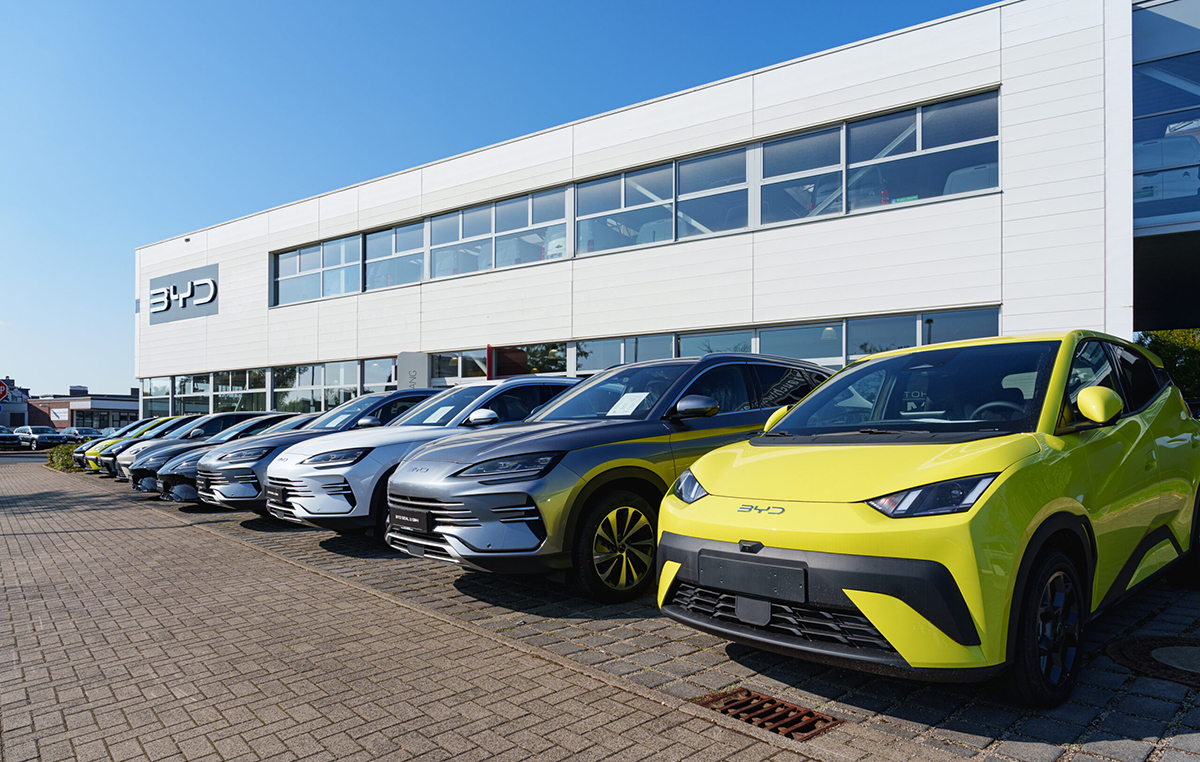
Are Chinese Cars Reliable? The Truth About Today’s Chinese Vehicles
Chinese cars have become a familiar sight on South African roads. Brands such as Chery, Haval, GWM, Omoda, Jaecoo, BAIC, GAC, Jetour and BYD have expanded rapidly, offering South African motorists more choice, competitive pricing and long lists of standard equipment.
But one question remains: are Chinese cars reliable in South Africa?
The short answer is that modern Chinese cars have improved considerably, but reliability varies by brand, model and, importantly, the quality of local after-sales support. South African buyers should therefore look beyond the country of manufacture and consider the individual vehicle and the company supporting it.
Chinese cars have come a long way
Older Chinese vehicles sold in South Africa sometimes developed a reputation for questionable build quality and reliability. However, the Chinese automotive industry has changed dramatically over the past two decades.
Large Chinese manufacturers have invested heavily in research and development, modern manufacturing facilities, technology and quality control. Some have also developed relationships with, or acquired, established international automotive companies. These developments have helped Chinese manufacturers close the gap with Japanese, Korean and European competitors.
Cars.co.za reported in 2025 that reliability and quality among modern Chinese vehicles had improved substantially, with some Chinese manufacturers performing much closer to established international brands in industry studies.
That does not mean every Chinese car is automatically reliable. As with any manufacturer, individual models can have different strengths and weaknesses.
South African sales provide an important clue
One reason Chinese brands are becoming more established locally is simply the number of vehicles being sold.
In the first half of 2026, the Chery Tiggo 4 range was the best-selling Chinese vehicle line in South Africa, with 11 322 units sold. The GWM Haval Jolion followed with 7 588 units, while the Omoda C5 recorded 5 219 sales. Several newer Chinese models, including the Jetour T2 and T1, also achieved significant sales.
High sales numbers do not prove that a vehicle is reliable. However, a growing number of vehicles on South African roads can contribute to a larger pool of local ownership experience, technicians and parts demand.
It also encourages manufacturers to invest in their South African dealer and servicing networks.
Warranty coverage is a major advantage
One of the strongest arguments for considering a Chinese vehicle in South Africa is the warranty and service-plan coverage offered by many brands.
For example, GWM South Africa introduced a 7-year/200 000 km vehicle warranty across most of its range in 2025, together with a 7-year/75 000 km service plan. Its hybrid and electric vehicles also have separate battery warranties.
Chery Group brands have similarly used long warranties as part of their value proposition. The Jaecoo J5, for example, is offered with a 5-year/150 000 km vehicle warranty, a 10-year/1-million-kilometre engine warranty for the first owner, and a 5-year/75 000 km service plan.
These warranties can significantly reduce the financial risk associated with unexpected mechanical problems during the early years of ownership.
However, buyers should always read the warranty conditions carefully. Not every component necessarily receives the same coverage, and maintenance requirements must usually be followed to keep the warranty valid.
After-sales support matters as much as reliability
For South African motorists, reliability is about more than whether an engine or gearbox lasts.
A reliable ownership experience also depends on whether the manufacturer can supply replacement parts, whether technicians are properly trained and whether there is a dealership or approved service centre reasonably close to you.
This is particularly important with newer brands. A company that has only recently entered the South African market has less long-term local history than Toyota, Volkswagen, or Ford, for example.
Chinese manufacturers are responding by expanding their dealer and service networks. Cars.co.za reported that investment in dealerships, after-sales service and parts availability has helped make Chinese vehicles increasingly viable for South African buyers.
Nevertheless, prospective buyers should check the local dealer situation before purchasing. A great vehicle can become frustrating to own if obtaining a replacement part takes weeks or if specialist servicing is difficult to access.
What about long-term reliability?
This is where buyers should remain realistic.
Some Chinese brands have been selling vehicles in South Africa for many years, while others are comparatively new. That means there is not yet the same depth of 10- or 15-year South African ownership data for every Chinese brand.
For example, Jaecoo only began operating in South Africa in 2024. Its vehicles may have impressive specifications and strong warranty coverage, but there simply has not been enough time to establish decades-long local reliability records.
This does not mean newer brands are unreliable. It means buyers should distinguish between evidence of current quality and proof of long-term durability.
Are Chinese electric cars reliable?
Chinese manufacturers are also major players in electric vehicles. BYD, in particular, has developed significant expertise in electric drivetrains and battery technology.
Electric cars have fewer moving mechanical components than traditional petrol or diesel vehicles, potentially reducing some maintenance requirements. However, battery condition, software, electronics and charging systems become important considerations.
Buyers considering an electric Chinese vehicle should therefore investigate the battery warranty, battery-replacement arrangements, availability of qualified technicians and charging support in South Africa.
Should South Africans avoid Chinese cars?
There is no factual basis for treating all Chinese cars as unreliable simply because they are Chinese.
The modern Chinese automotive industry is diverse, and the quality of individual manufacturers and models varies. Many current Chinese vehicles sold in South Africa offer extensive warranties, modern safety technology, competitive pricing and substantial standard equipment.
At the same time, buyers should not assume that every new Chinese brand has already demonstrated the long-term reliability of an established manufacturer. Resale values, dealer coverage, parts availability and the manufacturer's long-term presence in South Africa are all worth considering.
The bottom line
Chinese cars can be reliable in South Africa, and many modern models are a considerable improvement over the Chinese vehicles that created the industry's old reputation.
The smartest approach is to assess the specific brand and model, rather than judging a vehicle purely by its country of origin. Look at independent reviews, warranty terms, service intervals, safety results, owner experiences, dealer coverage and parts availability.
For a South African buyer, reliability ultimately means more than a vehicle surviving for many years. It means having dependable transport and a manufacturer that can support the vehicle throughout its ownership. Chinese manufacturers have made significant progress on both fronts, but their long-term track records will continue to develop as more of these vehicles accumulate kilometres on South African roads.
Guides

Reviews


0 Comments
Post Comment