 Trailers
 Buses
Buses
 Tractors
 Rollers
 Cranes
 Loaders
 Graders
 Forklifts
 Dozers
 Excavators
 Boats
Boats
 Caravans






How to Check Vehicle History in South Africa
The Complete Guide to Avoiding a Clunker, a Clone, or a Catastrophe
Let me tell you about something that happens every single day in South Africa.
Someone finds a great deal on a used car. The price is right, the photos look good, and the seller seems trustworthy. They hand over their hard-earned money. And then — weeks or months later — the nightmare begins.
The car gets impounded because it's flagged as stolen. Or the bank shows up to repossess it because the previous owner stopped paying the loan. Or a mechanic discovers that the "low mileage" car has been in a major accident and poorly repaired, making it structurally unsafe.
By then, the seller is long gone. And so is your money.
This guide will walk you through exactly how to check a vehicle's history in South Africa before you buy. What to look for, where to get reliable information, and how to protect yourself from the scams that cost South Africans millions of rands every year.
Part 1: The Harsh Reality of South Africa's Used Car Market
Let me start with some sobering numbers.
An estimated 45,000 vehicles are stolen in South Africa every year . That's more than 120 vehicles every single day. Hijackings account for approximately 38% of all vehicle theft incidents, with the majority occurring in urban centres during evening hours .
But here's what's even more concerning. Many of these stolen vehicles don't just disappear. They get "cloned" — given new identities — and sold to unsuspecting buyers.
Police operations have uncovered syndicates that "identify several vehicles that had been altered or had their identification numbers changed and were reintroduced into the eNatis System by vehicle crime syndicates. These vehicles were then sold to the community" .
In one operation, police recovered 45 stolen and hijacked vehicles valued at approximately R3.5 million .
The national vehicle recovery rate is 65% . That means over 15,000 stolen vehicles are never recovered. Many of them end up being sold to private buyers who have no idea they're driving stolen property.
Part 2: The Current Gaps in Vehicle History Transparency
Here's something that might surprise you. South Africa does not yet have a comprehensive, legally mandated vehicle history system that protects consumers.
The South African Motor Body Repairers' Association (SAMBRA) has been pushing for change, describing the used-car market as "a disaster in South Africa" .
The Problem with Current Systems
According to Juan Hanekom, national director of SAMBRA:
"Many cars classified as Code 2 (Used) in eNaTIS records may have been involved in severe accidents or declared uneconomical to repair by the relevant insurer, and are still being marketed through online platforms, deceiving consumers and creating safety risks" .
What does this mean for you? A car that has been written off by an insurer — potentially with severe structural damage — can still be legally registered as a Code 2 vehicle. There's no automatic flag in the system telling you this car has a troubled past.
What SAMBRA Is Proposing
SAMBRA has recommended rethinking vehicle codes based on the extent of damage :
-
Code A: Irreparable; must be crushed
-
Code B: Non-repairable body but with salvageable parts
-
Code N: Non-structural damage; can be repaired to a roadworthy condition
"The infrastructure for such a system already exists in South Africa," Hanekom says. "We simply need to legislate the codes" .
But until that happens, the burden falls on you — the buyer — to do your own detective work.
What a Roadworthy Test Won't Tell You
Even a valid roadworthy certificate isn't a guarantee.
Julian Pillay, National Director of the Vehicle Testing Association (VTA), explains:
"We only check for visible signs of damage, but if sub-standard repairs to a car are well concealed, it is difficult to detect accident damage within the scope and equipment constraints of a roadworthy inspection" .
The 174 printouts from NaTIS — the documents used to correlate physical information from the vehicle — "do not include the status code of the vehicle." Inspectors can only look for "jig marks, gaps in body panel adjustment, evidence of welding and repairs by heating, among others" .
A car can pass a roadworthy test and still have a hidden, dangerous past.
Part 3: The Repossessed Car Scam — A Growing Epidemic
Let me warn you about a scam that has exploded recently.
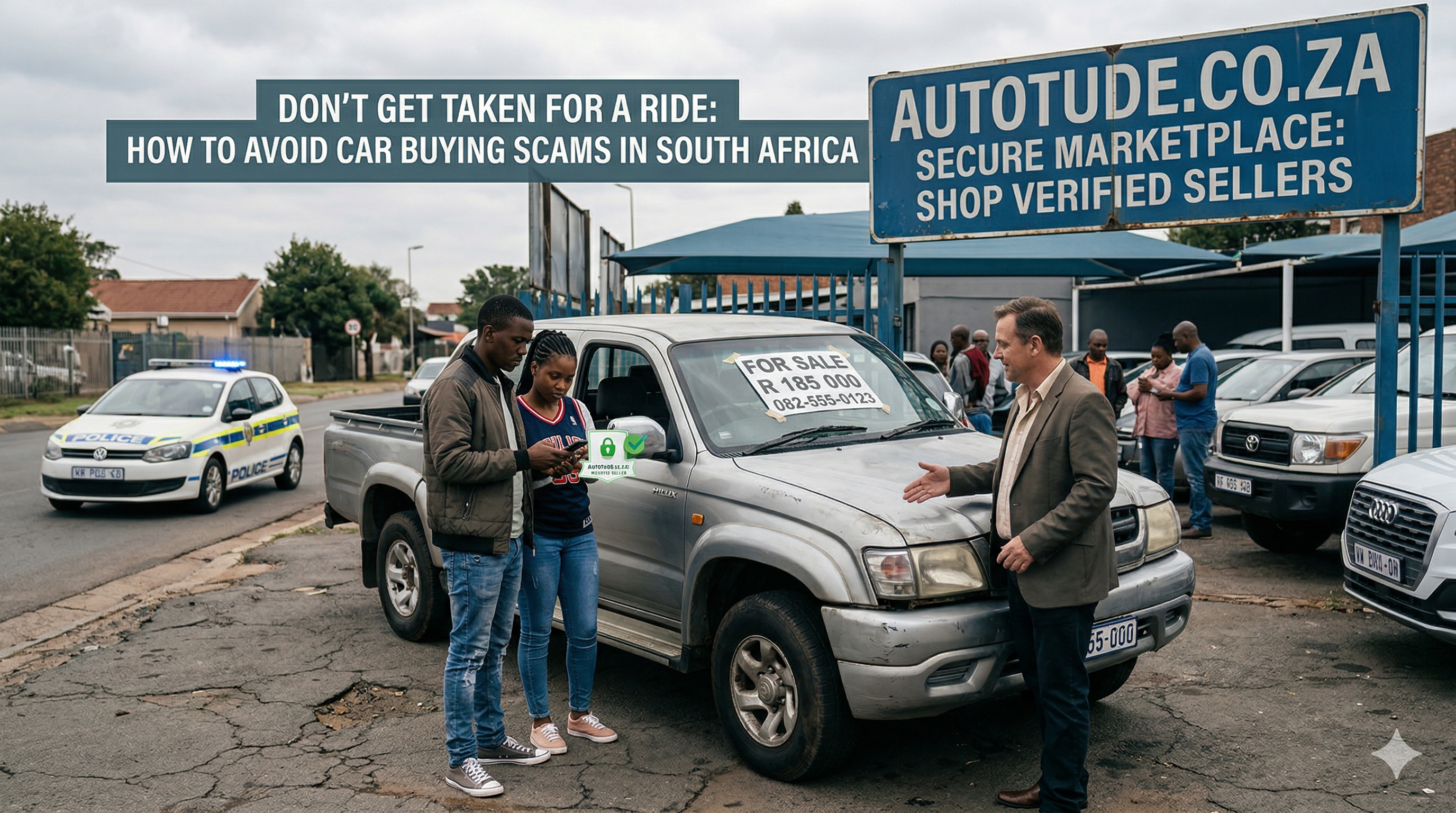
Scammers are advertising fake "bank repossessed" vehicles at unrealistically low prices on Facebook Marketplace, WhatsApp, and TikTok .
How it works:
The scammer advertises a late-model vehicle — popular brands like Toyota or Hyundai — at a price far below market value. They claim the car is repossessed by a bank and heading to auction. But for a deposit, they will "pull" it from the auction and sell it to you privately .
That deposit — often 30% to 50% of the price — is the trap.
Once you pay, the car never materialises. "They stall, give excuses, then block you," warns consumer journalist Wendy Knowler .
Real cases:
-
A buyer travelled to an address listed for the car, only to find nothing there.
-
Scammers used a real dealership's address, causing confused victims to arrive daily asking about cars that didn't exist .
-
A police officer and his wife were scammed out of R130,000 while trying to buy a Toyota Quantum — they paid R10,000 in cash and deposited another R120,000 into a fraudulent account .
Warning signs of a fake car deal:
Red Flag Why It's Dangerous
Repossessed cars sold outside official auctions Legitimate banks don't sell repossessed cars privately this way Requests for upfront deposits The scammer disappears with your money Pressure to act quickly Creates urgency to prevent you from thinking or verifying Communication pushed onto WhatsApp Easier to fake, harder to trace Refusal to allow in-person viewing The car doesn't actually exist
"Never pay for something you haven't seen," one expert warned .
Part 4: Step-by-Step Guide to Checking a Vehicle's History
Now let me walk you through exactly what you need to do before buying any used vehicle.
Step 1: Get the Vehicle Identification Number (VIN)
This is the single most important piece of information. The VIN is a unique 17-character code that identifies the vehicle.
Where to find the VIN:
-
On the dashboard, visible through the windshield (driver's side)
-
On the driver's side door jamb (a sticker or metal plate)
-
On the engine block
-
On the vehicle registration certificate
Write it down and check it multiple times. One wrong digit can give you information about a completely different vehicle.
Step 2: Run an Independent Vehicle History Check
This is the most important step. Pay for a history check from a reputable provider before handing over any money.
What a proper vehicle history check should reveal:
-
Whether the vehicle has been reported stolen
-
If there's outstanding finance on the vehicle
-
Accident history and damage reports
-
Previous ownership records
-
If the vehicle has been written off by an insurer
Available providers in South Africa:
Provider Services
AA Autocheck Vehicle history reports, service records, ownership details, pre-purchase inspections VIN Check / TransUnion Stolen vehicle checks, accident history, finance outstanding iTrader Comprehensive vehicle history, accident checks
The cost is typically R100–R300 — a small price to pay compared to the potential loss of tens of thousands of rands.
Step 3: Pay for a Professional Pre-Purchase Inspection
A vehicle history report tells you the car's paper trail. A professional inspection tells you about the car's actual physical condition.
Top companies offering pre-purchase inspections in South Africa:
AA Autocheck – The Automobile Association of South Africa is a trusted name. They offer a thorough examination of the vehicle's mechanical, electrical, and cosmetic aspects. Inspections can be carried out at the seller's location or at their designated inspection centres. They have nationwide coverage .
Roadworthy – They employ experienced technicians who use advanced diagnostic tools to detect hidden electronic or mechanical faults. They offer mobile inspections at the vehicle's location .
Car Inspector – They provide a detailed examination of mechanical, electrical, and structural components, and provide digital reports that can be easily shared and reviewed .
What an inspection typically covers:
-
Engine performance and compression
-
Transmission and gearbox condition
-
Suspension and steering components
-
Brake system
-
Electrical systems and diagnostics
-
Bodywork for signs of previous accident damage
-
Paint thickness measurements (to detect resprays)
-
Evidence of welding or structural repairs
Cost: Approximately R500–R1,500 depending on the provider and depth of inspection.
Step 4: Verify Against eNaTIS
The National Traffic Information System (eNaTIS) is the government's central vehicle database. You should verify that the details on the registration certificate match what's in the system.
While you can't access eNaTIS directly as a private individual, you can work with a vehicle testing centre or registering authority to verify the information.
What to check:
-
The VIN on the car matches the VIN on the registration certificate
-
The engine number matches
-
The vehicle's colour and specifications match
-
The owner's details are correct
Watch for tampering: Look at the VIN plate on the dashboard. Is it straight? Are the numbers perfectly aligned and factory-stamped? Factory stampings are precise; amateur re-stampings for cloned vehicles often look messy, with misaligned numbers or different font styles.
Step 5: Get a Dealer Warranty (If Buying from a Dealership)
If you're buying from a registered dealership, you have additional protections under the Consumer Protection Act. Legitimate dealerships should offer:
-
A warranty on the vehicle (varies by dealer)
-
Cooling-off period (buyers have 5 days to reconsider)
-
Protection against hidden defects (implied warranty under the CPA)
If a dealer refuses to provide a warranty or any form of after-sale protection, that's a red flag.
Part 5: Understanding Vehicle Status Codes
South Africa uses a coding system for vehicle status. Understanding these codes is crucial.
Code Meaning What It Tells You
Code 1 Brand new, unregistered Vehicle has never been registered; typically from a dealership Code 2 Used Vehicle has been previously registered; most used cars fall here — but note that this code does NOT reveal accident history Code 3 Deregistered (written off) Vehicle has been declared a write-off; requires inspection before re-registration Code 4 Built-up vehicle Assembled from parts; requires special inspection
The Code 2 Problem: As SAMBRA points out, an accident-damaged car that insurers paid out on can still be Code 2 . There's no automatic flag telling you the vehicle has been in a major accident. This is why independent history checks are so important.
What SAMBRA Proposes: New Codes for Transparency
To fix this, SAMBRA has proposed a more detailed coding system :
-
Code A: Irreparable; must be crushed — cannot be returned to the road
-
Code B: Non-repairable body but with salvageable parts
-
Code N: Non-structural damage; can be repaired to a roadworthy condition
Until these codes are legislated, you cannot rely on the existing status codes alone.
Part 6: Cloned and Stolen Vehicles — How to Spot Them
"Cloning" is when criminals steal a vehicle and give it the identity of a legitimate vehicle. They take the VIN, engine number, and registration from a legal car and stamp them onto a stolen one .
How to spot a cloned vehicle:
Inspection Point What to Look For
VIN plate Crooked, glued instead of riveted, numbers that don't look factory-stamped Engine number Signs of grinding, re-stamping, or different font from manufacturer Door stickers Missing, peeling, or inconsistent with the vehicle's age Windscreen VIN All windows usually have the VIN etched; mismatched or missing etchings are suspicious Multiple VIN locations All VIN locations should match — if they don't, be very concerned Service history Service records should show mileage progression; gaps or inconsistencies suggest tampering
Police warning on buying cloned vehicles:
Major General Bheki Langa, KwaZulu-Natal acting provincial commissioner, has warned: "The community is also warned not to collude with criminals by buying vehicles that have been cloned as it is only a matter of time before the long arm of the law catches up with you" .
While you might be an innocent buyer, knowingly purchasing a cloned vehicle is a criminal offence.
Part 7: Outstanding Finance — A Hidden Risk
Here's a scenario that happens more often than you think.
You buy a car from a private seller. The price seems fair. You pay the money. A few months later, a bank representative shows up with a court order to repossess the vehicle. The previous owner stopped making payments, and the bank still has a legal claim on the car.
This happens because the vehicle was used as collateral for a loan that was never paid off.
How to protect yourself:
-
Always run a finance check before buying. Providers like TransUnion can tell you if there's outstanding finance on the vehicle.
-
If the seller claims the finance is paid off, ask for a settlement letter from the bank.
-
If the car is still under finance, the bank is the legal title holder — not the seller. The bank must be involved in the transfer process.
Legal context: Under the National Credit Act, a credit provider (like a bank) has the right to repossess goods under a credit agreement if the consumer defaults . The law protects lenders, but that means you could be left with nothing if you buy a car with outstanding finance.
Part 8: Physical Inspection Checklist
Even before you pay for a professional inspection, there are things you can look for yourself.
Exterior Inspection
-
Walk around the car and look for panel gaps that are uneven — this can indicate accident damage and poor repairs
-
Look for paint colour mismatches between panels — resprayed panels will often look slightly different in certain light
-
Check for overspray on rubber seals or trim — evidence of a respray that might be hiding damage
-
Inspect the windscreen for chips or cracks — replacements aren't cheap
-
Check all lights for cracks, moisture inside, or mismatched lenses
Tyre Inspection
-
Check tread depth using the match test (insert a match horizontally; if it sits below the tread, you're okay; if it's level or above, the tyre is worn)
-
Look for uneven wear patterns — this can indicate alignment or suspension problems
-
Check sidewalls for cuts, bulges, or cracks
-
All tyres should be the same brand and model ideally; mismatched tyres suggest the seller cut corners
Under the Bonnet
-
Check fluid levels and condition — clean oil is amber, not black or milky
-
Look for fluid leaks (oil, coolant, brake fluid)
-
Check belts for cracks or fraying
-
Listen for unusual noises when the engine is running (ticking, knocking, rattling)
Interior Inspection
-
Check that all dashboard warning lights come on when you start the car and then turn off
-
Test all lights: headlights (high and low beam), indicators, brake lights, reverse lights, hazards
-
Test the air conditioning and heating
-
Check seatbelts for fraying and ensure they retract properly
-
Look for signs of flood damage (musty smell, rust under seats, moisture in light housings)
Under the Vehicle
-
Look for rust, especially underneath and around wheel wells
-
Check for fluid leaks
-
Inspect the exhaust system for rust or holes
-
Look for signs of welding or structural repairs
Test Drive
-
Listen for unusual noises when driving (clunks, squeaks, grinding)
-
Feel for vibrations, pulling to one side, or wandering
-
Test the brakes — they should be firm and stop the car in a straight line
-
Test the steering — there shouldn't be excessive play
-
Check that the gearbox shifts smoothly
Part 9: Legal Protections for Car Buyers
The law provides some protections for car buyers, but they differ depending on where you buy.
Buying from a Registered Dealership
Protection What It Means
Consumer Protection Act Full CPA protection applies Implied warranty Vehicle must be safe, of good quality, and durable for a reasonable time No "voetstoots" Dealers cannot sell "as-is" under the CPA Right to return Within 6 months for defects, you can request repair, replacement, or refund
Buying from a Private Seller
Protection What It Means
No CPA protection Private sales are not covered by the CPA "Voetstoots" applies You generally buy "as-is" Fraud exception You can claim if the seller deliberately concealed a material defect Caveat emptor "Buyer beware" — the burden is on you
The difference is stark. A dealership sale gives you legal recourse if something is wrong. A private sale is largely buyer-beware — which makes your pre-purchase checks even more critical.
Part 10: Your Pre-Purchase Checklist
Before you hand over a single rand, run through this checklist.
Documentation Verification:
-
Vehicle registration certificate (RC1) matches the physical car — check VIN and engine number
-
Seller's ID matches the name on the registration certificate
-
No outstanding finance — verified through a history check
-
Vehicle is not reported stolen — verified through a history check
-
Roadworthy certificate is valid (less than 60 days old)
Physical Inspection:
-
Vehicle visually inspected for accident damage
-
Tyre tread depth is legal (minimum 1.6mm)
-
All lights work
-
Test drive completed
-
Professional pre-purchase inspection completed (strongly recommended)
Financial Safety:
-
Only pay after seeing the vehicle in person
-
Never pay deposits or upfront fees to unknown sellers
-
Use traceable payment methods (bank transfer, not cash or cash send)
-
Get a signed sales agreement with both parties' details
Red Flags Checklist (Walk away if any are present):
-
Price is significantly below market value
-
Seller pressures you to act quickly
-
Seller refuses in-person viewing
-
Transaction is pushed to WhatsApp only
-
Payment is requested via cash send or anonymous method
-
Documentation looks tampered with or incomplete
Final Thoughts
Checking a vehicle's history in South Africa requires diligence. The system isn't perfect — SAMBRA's calls for legislative change haven't yet been fully implemented, and the gaps in eNaTIS mean you can't rely on government records alone.
But here's what you can do.
Run a history check through a reputable provider. Pay for a professional pre-purchase inspection. Physically inspect the car yourself. And never — never — hand over money before you've seen the vehicle in person.
The scams targeting car buyers are sophisticated. Fake repossessed car deals, cloned vehicles, and outstanding finance traps have cost South Africans millions of rands .
But the scammers rely on one thing: buyers who are in a hurry. Buyers who see a "good deal" and don't want to miss out. Buyers who skip the checks because they trust the seller.
Don't be that buyer.
Take your time. Do your homework. And remember — if a deal looks too good to be true, it almost always is.
References
-
FAnews. "Pressure continues to legislate for vehicle history transparency." (10 February 2025)
-
EWN. "South Africans scammed with fake repossessed car deals." (7 April 2026)
-
Imotoimoto. "Top 3 Companies for Used Car Inspections in South Africa." (26 September 2024)
-
World Legal Information Institute. Bobotyana v Nedbank Limited (Eastern Cape High Court, Case No. 174/2017, 31 October 2017)
-
The Citizen / Berea Mail. "Stolen and hijacked vehicles seized." (10 July 2017)
-
The Mercury. "Durban vehicle sale fraud syndicate busted." (16 February 2026)
-
Car Tracker Prices South Africa. "Vehicle Theft Statistics South Africa 2026." (15 January 2026
Guides




Reviews